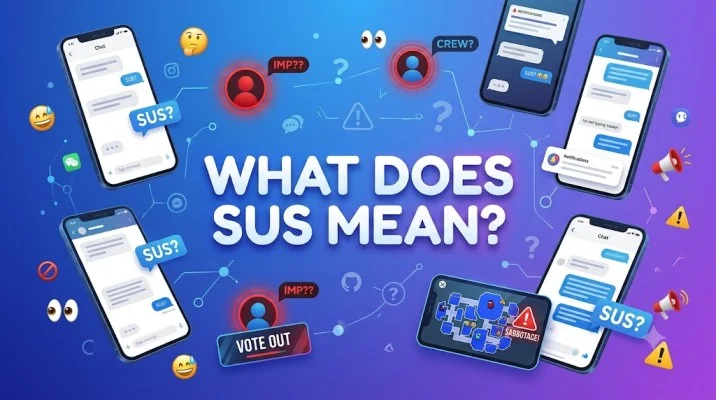
Have you ever received a message saying “That’s sus” and wondered what it actually meant? You’re not alone. If you’re a student, gamer, parent, social media user, or someone trying to understand modern internet slang, this guide is for you. I’ll explain everything in simple words so you can recognize the term whenever you see it online or in everyday conversations.
Today, what does sus mean is one of the most searched internet slang questions because the word appears everywhere from TikTok videos and Snapchat chats to Discord servers, gaming lobbies, and even real-life conversations. You might hear friends joking about someone acting “sus” or see the word in memes that spread across social media.
By the end of this guide, you’ll know exactly what sus means, where it came from, when to use it, when to avoid it, and how to respond naturally without feeling confused.
What Does Sus Mean?
Sus is a shortened form of the word “suspicious” or “suspect.” It describes someone or something that seems dishonest, strange, questionable, or likely to be hiding the truth.
People usually say someone is sus when they believe that person’s behavior doesn’t seem normal.
Simple Definition
Sus = Suspicious, shady, questionable, or acting in a way that raises doubt.
The meaning depends on the situation. Sometimes it’s a serious accusation, while other times it’s simply a joke among friends.
Everyday Examples
Friend 1: “Why did Jake leave right before the teacher arrived?”
Friend 2: “That’s pretty sus.”
Player A: “Who sabotaged the mission?”
Player B: “Blue is acting sus.”
Person 1: “He suddenly deleted all his messages.”
Person 2: “That sounds really sus.”
In each example, the speaker believes someone’s actions seem suspicious.
What Does “Sus” Stand For?
It doesn’t stand for an acronym.
Instead, it’s simply a shortened slang version of:
- Suspicious
- Suspect (less common)
Background & History
Although many people believe Among Us created the word, that’s not actually true.
The slang sus has existed for decades in spoken English. It was commonly heard in Britain and Australia long before social media made it famous.
The word exploded in popularity during 2020 because of the multiplayer game Among Us.
In the game, players try to identify an impostor hiding among the crew. Since typing quickly matters, players shortened “suspicious” to “sus.”
Typical chat looked like this:
“Red is sus.”
Millions of players began using the expression daily.
Soon it spread to:
- TikTok
- Twitter (X)
- Snapchat
- Discord
- Twitch
- YouTube
- Schools
- Workplaces (informally)
Today, people use sus even if they’ve never played the game.
How Is Sus Used?
1. In Text Messages
People use it to question someone’s behavior.
Alex: “You ignored my texts all day.”
Sam: “My phone died.”
Alex: “Sounds sus 😂”
2. On Social Media
Creators use sus in memes, captions, and comments.
Example:
“That excuse is kinda sus.”
3. In Gaming
Gaming remains the most famous place for the word.
Player 1: “Who vented?”
Player 2: “Green is sus.”
4. In Daily Conversation
Friends also use it face-to-face.
Emma: “You smiled after breaking the vase.”
Lily: “Why are you looking at me?”
Emma: “Because you’re acting sus.”
5. In Group Chats
Someone behaving strangely may receive messages like:
“Bro…”
“You’re sus.”
Common Misconceptions & Clarifications
Many people misunderstand the word.
Misconception 1: Sus Always Means Someone Is Guilty
Not true.
Sometimes people use it jokingly without believing someone actually did anything wrong.
Misconception 2: Sus Is Always Offensive
Usually it isn’t.
Among friends, it’s often playful.
However, calling someone sus in a serious discussion could sound rude.
Misconception 3: It’s Only a Gaming Word
Not anymore.
Today it’s common across:
- Schools
- Offices (casual chats)
- Social media
- Text messages
- Family conversations
Misconception 4: It Refers to One Specific Thing
Actually, someone can be sus because of:
- Strange behavior
- Lying
- Keeping secrets
- Looking nervous
- Giving unusual excuses
Similar Terms & Alternatives
Several slang words carry similar meanings.
| Word | Meaning | Tone |
|---|---|---|
| Sus | Suspicious | Casual |
| Sketchy | Unsafe or questionable | Casual |
| Shady | Dishonest or secretive | Negative |
| Fishy | Doesn’t seem right | Mild |
| Suspicious | Formal version | Neutral |
| Dodgy | Questionable (UK) | Informal |
| Questionable | Raises concern | Professional |
Which One Should You Use?
- Sus → friends
- Sketchy → casual conversations
- Suspicious → formal writing
- Questionable → workplace
How to Respond When Someone Says “Sus”
Your reply depends on the situation.
Casual Response
“Haha, I’m not sus!”
“You’re imagining things.”
Funny Response
“No evidence 😂”
“Trust me… probably.”
“Caught in 4K?”
Serious Response
“Why do you think that?”
“Let me explain.”
Professional Response
If someone jokingly says your idea seems “sus”:
“Let me clarify my reasoning.”
Privacy-Conscious Response
If someone asks personal questions:
“I’d rather keep that private.”
Regional or Cultural Differences
The word sus is now understood in many English-speaking countries.
United States
Extremely common among teenagers and young adults.
United Kingdom
Still used, although people also say:
- Dodgy
- Sketchy
Australia
People frequently use:
- Sus
- Dodgy
Canada
Very common in gaming and texting.
Non-English Countries
Many gamers use sus even while speaking another language.
The word has become international because of memes and gaming culture.
Sus vs Similar Expressions
| Expression | Meaning | Best Used For |
|---|---|---|
| Sus | Suspicious behavior | Friends, gaming |
| Sketchy | Unsafe or questionable | Places or people |
| Shady | Dishonest intentions | Serious criticism |
| Fishy | Something doesn’t feel right | Mild suspicion |
| Weird | Strange | General situations |
| Odd | Unusual | Neutral conversations |
The biggest difference is that sus usually suggests someone might be hiding something.
Usage in Online Communities & Dating Apps
Tinder
Someone may say:
“His profile looks sus.”
Meaning:
- Fake account
- Catfish
- Inconsistent photos
- Strange bio
Twitter (X)
Users comment:
“That’s sus.”
Usually reacting to:
- News
- Celebrities
- Viral videos
- Politics
- Internet drama
TikTok
Often appears in:
- Memes
- Comedy videos
- Prank clips
- Relationship content
Discord
Very common during gaming discussions.
Users call stories “sus” if details don’t seem believable.
Tips for Responding Online
- Don’t assume someone is insulting you.
- Ask for clarification if needed.
- Keep the tone light unless it’s a serious discussion.
Hidden or Offensive Meanings
Generally, sus is harmless.
However, context matters.
Calling someone sus repeatedly may:
- Accuse them unfairly
- Damage trust
- Cause arguments
In some online communities, people have occasionally used sus with inappropriate jokes or double meanings.
Because of this, always consider:
- Your audience
- The conversation
- The tone
A playful joke between friends can sound offensive in another setting.
Is Sus Appropriate for Professional Communication?
Usually no.
Professional emails and workplace communication should avoid internet slang.
Instead of saying:
“This looks sus.”
Try:
- “This appears suspicious.”
- “This requires further review.”
- “This information seems inconsistent.”
- “This raises some concerns.”
When Is It Acceptable?
Only in very casual workplace chats where everyone understands internet slang.
Even then, formal wording is usually the safer choice.
Frequently Asked Questions
What does sus mean in texting?
It means someone or something seems suspicious, dishonest, or questionable.
Is sus a bad word?
No. It’s informal slang and isn’t considered profanity.
Did Among Us invent the word?
No. The word existed before the game but became extremely popular because of it.
Can adults use sus?
Yes. Although younger people use it more often, anyone can say it in casual conversations.
What is the opposite of sus?
Words like trustworthy, honest, reliable, or legitimate are common opposites.
Is sus only used in gaming?
No. Today it’s common on social media, in text messages, memes, and everyday conversations.
Can I use sus in school or work?
Only in casual conversations. Avoid it in formal writing or professional communication.
Conclusion
The answer to what does sus mean is simple: it describes someone or something that seems suspicious, questionable, or not entirely trustworthy. While the word became famous through Among Us, it has grown into one of the most recognizable internet slang terms used across texting, social media, gaming, and everyday conversations. Understanding sus helps you follow online discussions, jokes, and memes with confidence. Just remember that tone and context matter. Among friends, it often adds humor, but in professional or serious situations, choosing more formal words like suspicious or questionable is a better option. Knowing when to use sus when not to will help you communicate naturally and avoid misunderstandings.
Discover More Post:
What Does the Green Dot Mean on Snapchat – Punzelo.com
What Does OFC Mean| Complete Meaning, Origin, Usage …