Quick Answer:
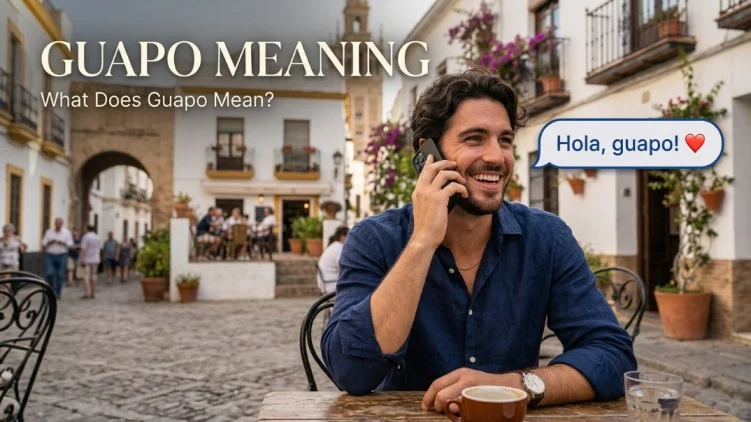
“Guapo” is a Spanish word that usually means “handsome” or “good-looking” when describing a man. Depending on context and region, it can also mean brave, tough, or attractive.
Have you ever received a message saying “guapo” and wondered whether it was a simple compliment or something more personal? This small Spanish word can carry more meaning than you might expect. If you are learning Spanish, chatting with someone online, dating, traveling, or watching Spanish-language movies and shows, understanding guapo meaning can help you read the situation correctly.
The most common English translation is “handsome” or “good-looking.” However, the exact feeling behind the word depends on who says it, who receives it, and the situation. A friend might use it playfully, a romantic partner might use it affectionately, or someone might use it simply as a friendly way to address another person.
In this guide, you will learn what guapo means, where it comes from, how people use it in conversations and texts, and how you can respond naturally.
Definition & Meaning
Guapo is a Spanish adjective that most commonly means handsome, attractive, or good-looking when referring to a man.
For a woman, the usual feminine form is guapa, which can mean beautiful, pretty, or attractive.
For example:
“Él es muy guapo.”
This means:
“He is very handsome.”
You may also hear:
“Qué guapo estás.”
This means:
“You look so handsome.”
The word can describe someone’s physical appearance, but it does not always have to be strongly romantic. Context matters.
Guapo Can Be More Than “Handsome”
In some Spanish-speaking regions, guapo can have additional meanings. Depending on the country and situation, it may describe someone who is brave, bold, tough, or willing to confront a difficult situation.
For example:
“Es muy guapo y no tiene miedo.”
Depending on context, this could suggest that the person is brave or tough rather than simply attractive.
There is also a regional difference in some varieties of Spanish. In certain places, guapo can be used in a way that is closer to tough guy or someone who likes to fight.
That is why translating the word without context can sometimes be misleading.
Basic Meanings
| Meaning | Common context |
|---|---|
| Handsome | Describing a man |
| Good-looking | Talking about appearance |
| Attractive | Romantic or casual conversation |
| Brave | Some regional contexts |
| Tough | Certain regional uses |
| Affectionate nickname | Friendly or romantic conversations |
The safest general translation is “handsome” when talking about a man’s appearance.
Background & History
The Spanish word guapo has a long history and has developed several meanings over time.
Its exact historical development is connected with older Spanish usage and ideas of appearance, confidence, and boldness. Modern Spanish speakers mainly recognize guapo as a word for someone who looks attractive or handsome, but older and regional uses can include ideas such as courage and toughness.
The feminine form guapa developed alongside the masculine form. Today, Spanish speakers commonly use both words in everyday conversations.
You might hear a mother telling her son:
“¡Qué guapo estás!”
She may simply be saying:
“You look so handsome!”
There is no need for the expression to be romantic.
You might also hear a romantic partner say:
“Hola, guapo.”
Here, the word can sound affectionate or flirtatious.
The meaning is therefore influenced by the relationship between the speakers.
Over time, guapo has become common in Spanish-speaking entertainment, music, social media, dating apps, television, and everyday conversation. Spanish learners often encounter it early because it is a simple and useful way to compliment someone’s appearance.
Regional differences remain important. In some places, guapo may carry meanings that are less common elsewhere. This is one reason language learners should look at the complete sentence instead of translating one word in isolation.
Usage in Various Contexts
You can use guapo in many everyday situations.
1. Complimenting Someone
Carlos: “¿Qué tal mi nuevo traje?”
Ana: “Te ves muy guapo.”
Carlos: “¡Gracias!”
Translation:
Carlos: “What do you think of my new suit?”
Ana: “You look very handsome.”
Carlos: “Thanks!”
2. Romantic Conversation
A partner may say:
“Buenos días, guapo.”
This means:
“Good morning, handsome.”
Here, the word sounds warm and affectionate.
3. Texting
Someone might send:
“Hola, guapo 😊”
Depending on the relationship, this can be friendly, affectionate, or flirtatious.
4. Social Media
A friend might comment:
“Qué guapo!”
This means:
“So handsome!”
It can be a simple compliment about a photo.
5. Family Conversations
A parent can say:
“Mi niño está muy guapo.”
This means:
“My boy looks so handsome.”
There is nothing romantic about this use.
6. Casual Address
In some Spanish-speaking settings, people use appearance-related words as friendly forms of address.
“Hola, guapo, ¿cómo estás?”
Depending on the speaker and region, this may simply sound warm and friendly.
7. Describing Someone
“Ese actor es muy guapo.”
Translation:
“That actor is very handsome.”
Here, it is simply an observation about appearance.
Common Misconceptions & Clarifications
One of the biggest misconceptions about guapo is that it always means someone is flirting.
That is not true.
A person can say guapo without having romantic feelings. Friends, relatives, parents, and strangers can all use the word in suitable situations.
Does Guapo Always Mean Handsome?
No.
Handsome is the most common meaning, but regional Spanish can give the word other meanings.
Is Guapo Always Romantic?
No.
Consider these two examples:
“Hola, guapo.”
This could sound affectionate or flirtatious.
“Mi hijo está guapo.”
This is simply a parent complimenting their son.
The relationship changes the meaning.
Can Guapo Describe a Woman?
The standard feminine form is guapa.
For example:
“Ella es muy guapa.”
This means:
“She is very beautiful.”
Is Guapo an Insult?
Normally, no.
However, regional usage can sometimes connect the word with toughness, aggression, or someone trying to act tough. The surrounding sentence and local culture are important.
Is Guapo Used Only for Physical Appearance?
Not always.
In some regional contexts, it can describe qualities such as courage or toughness. Still, appearance is the dominant meaning for many Spanish speakers today.
Similar Terms & Alternatives
Spanish has many ways to compliment someone’s appearance.
Guapo
Usually means handsome or good-looking.
“Eres muy guapo.”
“You are very handsome.”
Guapa
The feminine form.
“Ella es muy guapa.”
“She is very beautiful.”
Bonito
Often means pretty, nice, or beautiful, depending on context.
“Qué bonito vestido.”
“What a pretty dress.”
Bello
Means beautiful and can sound more literary or formal in some contexts.
Hermoso
Means beautiful, gorgeous, or lovely and can sound stronger or more expressive.
Atractivo
Means attractive.
It can sound more neutral and direct when discussing physical attraction.
| Spanish word | English meaning | Common use |
|---|---|---|
| Guapo | Handsome | Men, appearance |
| Guapa | Beautiful | Women, appearance |
| Bonito | Pretty / nice | Things and people |
| Bello | Beautiful | Expressive or literary |
| Hermoso | Beautiful / gorgeous | Strong compliment |
| Atractivo | Attractive | Appearance or attraction |
How to Respond to This Term
Your response depends on the relationship and tone.
Casual Response
If someone says:
“Hola, guapo.”
You can say:
“Hola, ¿cómo estás?”
Simple and friendly.
Friendly Response
If a friend compliments you:
Friend: “Qué guapo estás.”
You: “Gracias, amigo. Tú también te ves bien.”
This keeps the conversation relaxed.
Romantic Response
If someone you like says:
“Hola, guapo ❤️”
You could reply:
“Hola, guapa. Me alegra saber de ti.”
This matches the affectionate tone.
Funny Response
If you want to joke:
“Lo sé, mi espejo me lo recuerda todos los días. 😂”
This works best with someone you already know well.
If You Do Not Speak Spanish
You can simply ask:
“What does guapo mean?”
Or:
“Does guapo mean handsome?”
There is nothing wrong with asking for clarification.
If You Want to Keep Things Professional
If someone uses guapo toward you and you want to keep the conversation formal, you can respond to the main topic rather than the compliment.
For example:
“Thank you. About the meeting, what time works for you?”
This politely moves the conversation back to business.
Regional or Cultural Differences
Spanish is spoken across many countries, and guapo can sound slightly different depending on the region.
In many Spanish-speaking communities, the common meaning is handsome or attractive.
In Spain and many Latin American countries, you may hear guapo frequently in everyday conversation.
However, regional slang can change the meaning.
In some areas, guapo can be associated with someone who is brave, tough, or willing to confront others. In certain regional uses, it can even suggest a person who behaves like a tough guy.
This does not mean every Spanish speaker understands the word that way.
For most learners, the safest rule is:
If someone is talking about appearance, guapo means handsome or attractive.
If the conversation is about courage, fighting, or someone’s behavior, consider whether a regional meaning is intended.
Guapo vs. Guapa
The basic gender distinction is:
Guapo: masculine
Guapa: feminine
Examples:
“Él es guapo.”
“He is handsome.”
“Ella es guapa.”
“She is beautiful.”
Spanish adjectives often change form to agree with the noun or person they describe.
Comparison with Similar Terms
English speakers often want to know how guapo differs from words such as handsome, cute, beautiful, and attractive.
| Term | Main idea | Typical feeling |
|---|---|---|
| Guapo | Handsome / attractive | Positive |
| Handsome | Attractive man | Often masculine |
| Beautiful | Very attractive | Strong compliment |
| Cute | Attractive in a charming way | Light or affectionate |
| Attractive | Physically appealing | Neutral |
| Gorgeous | Extremely attractive | Strong compliment |
Guapo is closest to handsome when describing a man.
However, depending on context, English speakers may naturally translate it as good-looking, attractive, or even cute.
For example:
“Hola, guapo.”
Possible translations include:
“Hi, handsome.”
“Hey, good-looking.”
The best translation depends on the relationship and tone.
Usage in Online Communities & Dating Apps
You are likely to see guapo on social media and dating platforms where Spanish speakers interact.
Someone might comment:
“Muy guapo 😍”
This means:
“Very handsome.”
On dating apps such as Tinder, a message like:
“Hola, guapo 😉”
may be flirtatious.
However, do not automatically assume that every use is romantic. Some people use friendly compliments naturally.
On Instagram
A friend might comment:
“Qué guapo sales en esta foto.”
This means:
“You look so handsome in this photo.”
On Messaging Apps
A romantic partner might write:
“Buenas noches, guapo ❤️”
This is more clearly affectionate.
In Gaming Communities
A Spanish-speaking player might jokingly say:
“Buen trabajo, guapo.”
Depending on the community, this could simply be playful banter.
Dating Tip
If someone uses guapo on a dating app, look at the rest of the message.
“Hola, guapo 😊 ¿Cómo va tu día?”
sounds friendly or flirtatious.
“Eres muy guapo. Me encantaría conocerte.”
is much more clearly romantic.
Do not decide based on one word alone.
Hidden or Offensive Meanings
In normal modern Spanish, guapo is not an offensive word.
Its common use is positive. It is usually a compliment about appearance.
However, there are regional meanings that can surprise learners.
In some contexts, guapo may describe someone as tough, bold, or aggressive. It can sometimes be used for a person who acts like a fighter or wants to appear intimidating.
For example, depending on the regional variety:
“Se cree muy guapo.”
could potentially carry a meaning related to someone acting tough or overly confident.
This is very different from:
“Él es muy guapo.”
which normally means:
“He is very handsome.”
The difference comes from context and phrasing.
Is Guapo Sexually Explicit?
No.
Guapo itself is not sexually explicit. It is a normal adjective for attractiveness.
Still, when used in romantic messages, it can naturally express attraction.
Suitability for Professional Communication
Guapo is grammatically normal Spanish, but its suitability in professional communication depends on how it is being used.
If you are describing someone’s appearance in a personal or social context, it may be appropriate.
However, directly calling a coworker guapo or guapa in a professional setting may sound overly personal or flirtatious.
For example, instead of:
“Hola, guapa.”
a professional email would normally use:
“Hola, María.”
or:
“Buenos días, María.”
Professional Alternatives
If you need to compliment someone’s work, focus on their performance rather than appearance.
Instead of:
- “You look handsome today.”
- you could say:
- “You look very professional today.”
Or:
“Your presentation was excellent.”
In a workplace, compliments about skills, effort, communication, and results are usually safer than personal comments about appearance.
FAQs
What does guapo mean in English?
Guapo usually means “handsome,” “good-looking,” or “attractive” when describing a man.
Is guapo a compliment?
Yes. In its common use, guapo is a positive compliment about someone’s appearance.
Does guapo mean handsome or beautiful?
For a man, guapo is usually translated as handsome. The feminine form guapa can mean beautiful or pretty.
Is calling someone guapo flirting?
It can be, but not always. Friends, family members, and other people may use it casually or affectionately.
What is the female version of guapo?
The feminine form is guapa. For example, “Ella es guapa” means “She is beautiful.”
How should I respond if someone calls me guapo?
You can say “Gracias” if you want to keep it simple. If the situation is romantic, you can respond with a friendly compliment.
Can guapo have another meaning?
Yes. In some regional contexts, guapo can also relate to being brave, tough, or aggressive. Context is important.
Conclusion
The word guapo is one of the most useful Spanish compliments to recognize. Its most common meaning is handsome, good-looking, or attractive, especially when describing a man. The feminine form is guapa, which is commonly used to mean beautiful or pretty.
However, the word is not automatically romantic. A friend, parent, partner, or stranger may use it depending on the situation. Regional Spanish can also give guapo additional meanings related to bravery or toughness.
If someone calls you guapo, the safest response is simply “Gracias.” If the conversation is clearly playful or romantic, you can match that tone. Most importantly, look at the full conversation rather than assuming the meaning from one word alone.
Discover More Post:
- Blunt Meaning | What Does “Blunt” Really Mean? Simple …
- Susurrus Meaning | The Beautiful Word for a Soft, Whispering …
- Missus Meaning | What Does “Missus” Mean in 2026