Quick Answer:
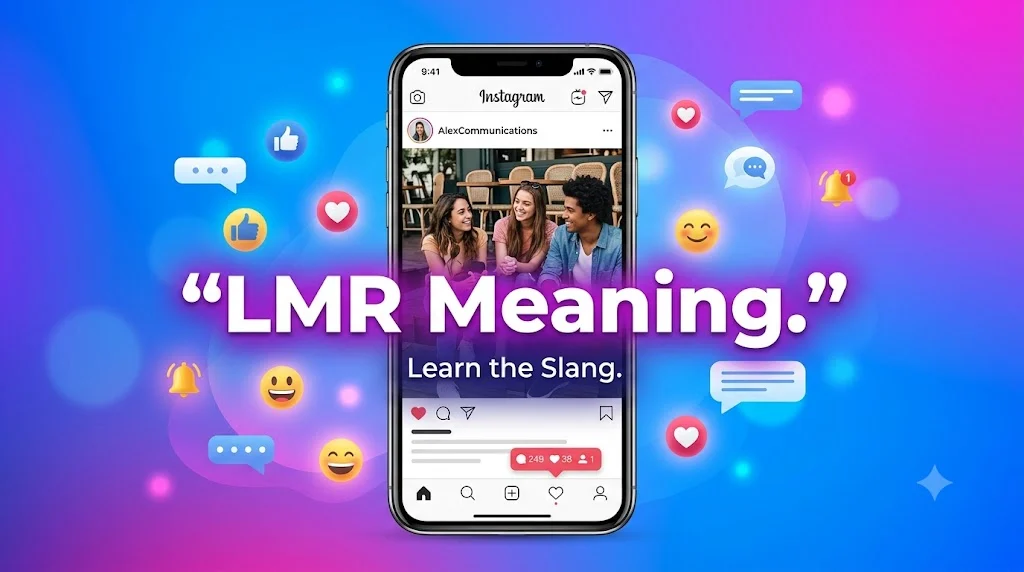
LMR most commonly means “Like My Recent.” It is a social media abbreviation used to ask someone to like or engage with their latest post, photo, or video.
You open your phone, check your messages, and suddenly someone sends three letters: “LMR.” No explanation. No full sentence. Just LMR. If you have never seen the term before, it can feel like a tiny puzzle.
If you are a teen, student, social media user, gamer, content creator, or someone who spends time in online chats, understanding LMR can save you from guessing what another person means. In most casual online conversations, LMR means “Like My Recent.” In simple words, the person is asking you to visit their profile and like their newest post.
You may see LMR in Instagram comments, Snapchat stories, TikTok interactions, DMs, or group chats. It is usually quick, casual, and direct. But context still matters because LMR can have other meanings outside social media. Knowing the setting helps you understand the message correctly instead of taking the wrong meaning from three simple letters.
Definition & Meaning of LMR
LMR most commonly stands for “Like My Recent.”
The phrase is an example of internet shorthand. Instead of typing the complete request, users shorten it to three letters:
- L = Like
- M = My
- R = Recent
So, when someone writes “LMR,” they are usually saying:
“Please like my most recent post.”
The word “recent” normally refers to the person’s newest or latest social media upload. This might be a photo, video, status, Reel, TikTok, or another recent piece of content.
For example, imagine your friend uploads a new Instagram picture. A few minutes later, they send you:
Friend: “LMR 😭”
You: “Haha, going now.”
Your friend is not asking you to explain anything. They simply want you to visit their profile and interact with their newest post.
What does LMR mean in a text?
In a normal text conversation, LMR usually means “Like My Recent” when the discussion is connected to social media.
For example:
A: “I just posted new pics.”
B: “Send me the link.”
A: “Just LMR on Instagram.”
Here, the meaning is clear because the conversation is about a new post.
Why do people say LMR?
People use LMR for several simple reasons:
- They want more likes.
- They want friends to support a new post.
- They want more engagement.
- They are promoting new content.
- They are participating in mutual engagement.
- They want followers to notice a recent upload.
LMR is therefore less about emotion and more about asking for social media engagement.
Background & History of LMR
LMR developed from the broader culture of internet abbreviations and social media shorthand. Online users have long shortened common phrases to make communication faster. Expressions such as LOL, BRB, OMG, and IDK became popular because typing a few letters was easier than writing the entire phrase.
LMR follows the same basic idea. Instead of writing “Can you please like my most recent post?”, someone can simply write “LMR.”
Internet slang dictionaries record LMR as “Like My Recent” and associate it with texting, online chat, instant messaging, blogs, and social media.
The expression became especially useful as social platforms made likes and engagement an important part of online interaction. A person could post something new and then use another platform, a story, comment, or direct message to encourage friends to check it.
For example, someone might post a picture on Instagram and then put this on Snapchat:
“New post 👀 LMR”
The Snapchat message directs friends toward the Instagram post.
Over time, LMR became associated with platforms where people regularly share photos and short videos. Current references commonly connect it with Instagram, Snapchat, TikTok, and similar social platforms.
The meaning itself has remained fairly simple. What has changed is where and how people use it.
Today, LMR can appear as:
- A direct message
- A comment
- A Snapchat story
- A TikTok comment
- An Instagram caption
- A group-chat message
- A short request between friends
The exact meaning is still usually “Like My Recent.”
Usage in Various Contexts
LMR can appear in several online settings, but the basic idea stays the same.
LMR in texting
In texts, LMR is usually a quick request.
A: “Bro I uploaded the birthday pics.”
B: “Where?”
A: “IG. LMR 😂”
The sender wants the other person to like the newest post.
LMR on Instagram
Instagram is one of the clearest places to understand LMR. Someone may upload a new photo and ask friends or followers to like it.
“New pic is up. LMR ❤️”
Or:
“LMR if you haven’t already 👀”
The person is directing attention toward their latest content. LMR is commonly described as a request to like a recent social media post.
LMR on Snapchat
A Snapchat user might post:
“New IG post! LMR 🔥”
This can be especially useful when someone uses Snapchat to tell friends about content uploaded somewhere else.
LMR on TikTok
On TikTok, someone might comment:
“LMR and I’ll return the love 👀”
Here, LMR may be part of a mutual-engagement request, where two users agree to interact with each other’s recent content.
LMR in casual conversations
Friends may use LMR without explaining it because they assume everyone understands the abbreviation.
Friend 1: “Posted something new.”
Friend 2: “LMR?”
Friend 1: “Yep 😂”
The tone is normally relaxed and informal.
LMR in gaming communities
LMR is not primarily a gaming term. However, gamers who also use social media may use it when promoting a recent clip, stream, or gaming video.
“New Valorant clip is up. LMR 🔥”
In that case, the gaming topic does not change the meaning. The person still means “Like My Recent.”
Common Misconceptions & Clarifications
One common mistake is assuming that every use of LMR has exactly the same meaning.
In social media conversations, “Like My Recent” is the most common meaning. But acronyms can have different meanings in other communities.
Misconception 1: LMR means “love my recent”
Not normally.
Some people may interpret the letters creatively, but the established social media meaning is “Like My Recent.”
Misconception 2: LMR always refers to Instagram
Not necessarily.
Instagram is a common place to see it, but LMR can be used across several social platforms. References also connect it with Snapchat, TikTok, and other online spaces.
Misconception 3: LMR is always a compliment
No.
If someone says:
“LMR”
they are generally asking for engagement, not saying that they personally like your content.
Misconception 4: LMR is always harmless slang
The social media meaning is harmless and casual. However, LMR has other meanings in some contexts, including a sexually related phrase sometimes described as “Last Minute Resistance.”
That alternative is not the normal meaning when you see LMR in an Instagram or TikTok engagement request. It is also a sensitive expression because it can frame sexual consent in an inappropriate way. It should not be treated as casual slang or used to pressure someone.
The safest rule is simple: look at the surrounding conversation before deciding what LMR means.
Similar Terms & Alternatives
Several expressions are similar to LMR because they ask people to interact with social media content.
| Term | Meaning | Typical Use |
|---|---|---|
| LMR | Like My Recent | Asking for a like on a recent post |
| LMS | Like My Status | Asking someone to like a status |
| Like my post | Direct request | Asking for engagement |
| Check my recent | View recent content | Asking someone to look at the newest post |
| Engage with my post | Interact with content | More direct or professional wording |
| Show some love | Support my content | Friendly social media request |
| New post, check it out | Visit new content | Casual promotion |
LMR vs. LMS
These two can look similar.
LMR = Like My Recent
LMS = Like My Status
The main difference is the content being referenced. LMR points toward a recent post, while LMS traditionally refers to a status update.
LMR vs. “Check my recent”
These phrases have a small but important difference.
LMR specifically asks for a like.
Check my recent only asks someone to look at the content. They may or may not be asked to like it.
How to Respond to LMR
Your response depends on your relationship with the person and whether you want to interact with their post.
Casual response
If it is a friend, keep things simple:
“Sure 😂”
Or:
“Got you!”
Funny response
If you want to joke around:
“Only if it’s actually good 😭”
Or:
“Fine, but you owe me one 😂”
Supportive response
If you want to encourage them:
“Already liked it! 🔥”
Or:
“Done! That post looks great.”
If you do not want to engage
You do not have to like something just because someone asks.
You can politely say:
“I’ll check it out when I get a chance.”
This is useful when you want to remain friendly without promising a like.
Privacy-conscious response
If the person sends you a suspicious link instead of simply asking you to visit their profile, be careful.
You can say:
“I don’t open random links, but I can check your profile directly.”
That keeps the interaction safer.
Regional or Cultural Differences
LMR is primarily internet slang, so its meaning depends more on online culture than on geography.
A user in the United States, United Kingdom, Canada, Australia, Pakistan, India, or another country may recognize LMR if they regularly use social media.
However, familiarity can differ between groups.
A teenager who spends hours on Instagram may immediately understand:
“LMR 😭”
An older person who rarely uses social media may have no idea what it means.
Language can also affect how people react to it. In multilingual communities, users may mix English abbreviations with another language:
“LMR bro, نئی pic ہے 😂”
The sentence combines English internet shorthand with another language, but LMR still means “Like My Recent.”
There is no major regional replacement that changes the basic meaning. Instead, people often use direct phrases such as:
- “Like my new post.”
- “Check my latest pic.”
- “Go like my recent.”
- “Show some support.”
- “Check my new upload.”
The key cultural difference is how comfortable people are with asking directly for engagement.
Some users see LMR as normal support between friends. Others may see repeated LMR requests as attention-seeking or spammy.
Comparison with Similar Terms
Understanding similar expressions can help you recognize what someone actually wants.
| Expression | What it asks you to do | Tone |
|---|---|---|
| LMR | Like the recent post | Very casual |
| Like my recent | Like the newest post | Casual |
| Check my recent | View the newest post | Casual |
| LMS | Like a status | Casual |
| Show some love | Support/interact | Friendly |
| Thoughts? | Give an opinion | Conversational |
| Rate my post | Give an evaluation | Casual |
| Share this | Repost/share content | Direct |
| Follow me | Follow the account | Promotional |
The most important difference is that LMR specifically points toward liking recent content.
For example:
“Check my recent”
does not necessarily mean you must like it.
But:
“LMR”
normally does.
Usage in Online Communities & Dating Apps
LMR can appear in online communities when users want to draw attention to a new post, photo, video, or profile update.
On platforms such as Instagram, TikTok, Snapchat, and X/Twitter, the expression may be used as a short engagement request.
On social media
A typical interaction might look like:
User: “LMR 🔥”
Friend: “Done!”
User: “Appreciate you!”
This is usually friendly and simple.
In gaming communities
Gamers may use LMR when sharing:
“New montage dropped. LMR 🎮🔥”
Again, the gaming context does not create a new slang meaning. It simply describes what the recent post contains.
On dating apps
LMR is not a standard dating-app term. If someone uses it on a dating platform, they may be asking you to like or check their latest social media post.
For example:
Match: “My Insta is in my bio. LMR 😅”
Here, the person is probably directing you toward their social profile.
However, be careful about moving conversations off a dating app too quickly. If someone sends suspicious links or asks for personal information, you do not need to follow the request.
A good rule
Do not assume LMR is flirting.
If someone sends you LMR, it normally means they want engagement. It does not automatically mean they like you romantically.
Hidden or Offensive Meanings
For most social media users, LMR is simply “Like My Recent.”
Still, acronyms can have alternate meanings in specific communities. One documented alternative is “Last Minute Resistance,” a term associated with sexual situations.
This meaning is considerably more sensitive than the social media meaning.
It is important to understand why context matters. If someone writes:
“LMR my new post 😂”
the meaning is clearly social media engagement.
But if LMR appears in a conversation about sexual behavior, the intended meaning may be different.
The sexual interpretation should be treated carefully. Consent is not something that should be described as an obstacle to overcome. If someone says no, pulls away, or changes their mind, that boundary must be respected.
So, if you see LMR online, do not immediately assume the offensive or sensitive meaning. Look at:
- The platform.
- The surrounding words.
- The topic.
- The relationship between the people.
- Whether the conversation is about social media.
On Instagram or Snapchat, “Like My Recent” is usually the obvious interpretation.
Suitability for Professional Communication
LMR is not recommended for professional communication.
It is informal internet slang. You might use it with friends, classmates, followers, or online communities, but it does not belong in most workplace emails or formal messages.
For example, avoid writing:
“LMR when you get a chance.”
to a manager or client.
Instead, say exactly what you mean:
“Could you please review my latest post when you have a moment?”
Or:
“Could you take a look at the latest update and share your feedback?”
Professional communication benefits from clarity. Acronyms such as LMR can create confusion, especially when the recipient is unfamiliar with social media slang.
Better professional alternatives
Instead of LMR, consider:
- “Please review my latest post.”
- “Could you take a look at my recent update?”
- “Please share your feedback.”
- “I would appreciate your thoughts.”
- “Could you review the latest version?”
The difference is simple: LMR sounds like casual social media language, while these alternatives communicate the request clearly and professionally.
FAQs
1. What does LMR mean in texting?
LMR most commonly means “Like My Recent.” It is usually a request to like someone’s newest social media post.
2. What does LMR mean on Instagram?
On Instagram, LMR usually means “Like My Recent.” Someone is asking you to visit their profile and like their latest post.
3. What does LMR mean on Snapchat?
On Snapchat, LMR generally means that the person wants you to like their recent social media content. They may use a Snapchat story to direct friends toward a recent Instagram or other social media post.
4. Is LMR a compliment?
No. LMR is usually a request, not a compliment. It means the person wants you to engage with their recent content.
5. Is LMR rude?
Not necessarily. Among friends, it can be completely normal. However, repeatedly asking strangers to like posts can sometimes feel pushy or promotional.
6. Can LMR have another meaning?
Yes. LMR has other meanings in specialized contexts. One documented slang meaning is “Last Minute Resistance,” but this is not the normal interpretation of an LMR request on social media.
7. Should I use LMR at work?
Usually, no. LMR is informal slang, so clear phrases such as “Please check my latest post” are better for professional communication.
Conclusion
LMR most commonly means “Like My Recent.” It is a short social media expression used when someone wants you to like their newest post, photo, video, or other recent content. You may see it in texts, Instagram messages, Snapchat stories, TikTok comments, and other casual online spaces.
The phrase is simple, but context still matters. LMR is informal and works best among friends, followers, and online communities. It is not a good choice for formal emails or professional conversations.
You should also remember that LMR has less common alternative meanings, so the surrounding conversation can help you understand what someone intends. When you see “LMR” next to a new social media post, though, the meaning is almost certainly “Like My Recent.”
Read More Related Articles:
What Does OFC Mean| Complete Meaning, Origin, Usage …
What Does Sigma Mean| Complete Meaning, Origin, Usage …