Quick answer:
Allure means a powerful quality that makes someone or something attractive, interesting, or tempting. It can describe physical beauty, charm, mystery, or strong appeal.
Some words describe beauty, while others describe the feeling that makes you want to look closer. Allure belongs to the second group. It is a word often used when something has a special charm that is hard to ignore. A person may have an alluring smile, a place may have an alluring atmosphere, or an idea may have an allure that keeps you curious.
If you are learning English, improving your vocabulary, reading books, writing professionally, or simply trying to understand a word you saw online, knowing the allure meaning can make many sentences easier to understand. It is common in everyday writing, social media captions, fashion, travel, dating, advertising, and professional conversations.
The interesting part is that allure is not always about obvious beauty. Sometimes the strongest attraction comes from mystery, confidence, elegance, rarity, or even something slightly unknown. Let’s explore what this word really means and how you can use it naturally.
Definition & Meaning
Allure means a strong quality of attraction or charm that makes someone or something appealing.
It can be used as both a noun and a verb, although the noun form is more common in everyday English.
As a noun, allure describes the special appeal something has.
For example:
“The allure of the old castle attracted thousands of visitors.”
Here, allure means the castle had a fascinating quality that made people want to visit it.
Another example is:
“She was drawn to the allure of city life.”
This means the excitement, opportunities, and lifestyle of the city attracted her.
As a verb, to allure means to attract or tempt someone.
“The bright lights allured tourists into the busy market.”
The word can describe many types of attraction, including:
- Physical beauty
- Charm
- Mystery
- Elegance
- Excitement
- Luxury
- Adventure
- Romance
- Curiosity
- Temptation
One important point is that allure is stronger than simple attractiveness. If something is attractive, you may like how it looks. If something has allure, it has a special quality that can make you want to get closer, learn more, or experience it.
For example:
Attractive: “The beach is beautiful.”
Alluring: “The quiet beach has an alluring sense of mystery.”
The second sentence suggests more than physical beauty. It creates a feeling that pulls you toward the beach.
Simple meaning
Allure = a powerful or mysterious attraction.
Background & History
The word allure has a long history and is connected to older forms of English and French.
It entered English through Anglo-French and Middle English forms related to the idea of attracting or enticing someone. Its history is connected with the concept of a lure, something that draws a person or animal toward it.
Over time, the word developed into the modern English idea of special attraction or charm.
Today, allure is often used when ordinary words such as “beauty” or “attraction” do not fully express the feeling being described.
For example, writers may talk about:
“the allure of the unknown”
This does not simply mean that the unknown looks beautiful. It means the unknown is fascinating because it creates curiosity.
The word is also common in descriptions of luxury and lifestyle.
You may see phrases such as:
“the allure of luxury travel”
or
“the allure of vintage fashion.”
In both examples, allure describes the qualities that make something desirable.
The word is also popular in literature because it can create a more emotional image than basic words like “attractive” or “interesting.”
A writer might say:
“The mysterious stranger had an undeniable allure.”
This suggests that the person had a powerful charm that was difficult to explain.
In modern English, allure appears in newspapers, magazines, advertisements, books, blogs, social media captions, dating profiles, and everyday conversations.
It is especially common when people want to describe something with a mixture of beauty, mystery, charm, and desire.
Usage in Various Contexts
The word allure can fit many situations. Its meaning stays connected to attraction, but the type of attraction can change.
1. Everyday Conversation
You can use allure when talking about something that strongly attracts you.
“What is the allure of living near the ocean?”
“For me, it is the peaceful atmosphere.”
Here, allure means the main attraction or appeal.
2. Dating and Relationships
Allure can describe someone’s charm or magnetic personality.
“There was something about her confidence that gave her a natural allure.”
This does not necessarily mean physical beauty. It can refer to confidence, personality, mystery, or presence.
3. Fashion
The word is common in fashion writing.
“The dress has a timeless allure.”
This suggests that the dress has an elegant quality that makes it appealing.
4. Travel
Travel writers often use allure to describe destinations.
“The island’s remote beaches add to its allure.”
The beaches are part of what makes the island attractive.
5. Social Media
You may see captions such as:
“There is something magical about the allure of old cities.”
Here, allure adds a more polished and emotional tone to the caption.
6. Advertising
Brands often use words connected to allure when they want to make a product sound desirable.
For example:
“Discover the allure of timeless elegance.”
This suggests that the product offers beauty and sophistication.
7. Professional Writing
Allure can also work in professional articles and reports.
“The region’s natural beauty contributes to its appeal for international visitors.”
In formal writing, appeal may sometimes sound more direct than allure.
Common Misconceptions & Clarifications
One common misconception is that allure only describes physical beauty.
That is not true.
A person, place, object, experience, idea, or lifestyle can have allure.
For example:
“The allure of working remotely attracted many professionals.”
There is no physical beauty involved. The attraction comes from freedom and flexibility.
Another misunderstanding is that allure always means something positive.
Usually, the word has a positive or fascinating tone, but it can also describe something tempting that may not be good for you.
For example:
“The allure of easy money can lead people into risky decisions.”
Here, allure means temptation or attraction, but the result may be negative.
Does allure mean love?
Not necessarily.
Allure can create attraction, but it does not automatically mean romantic love.
“The allure of Paris attracts millions of visitors.”
This has nothing to do with romantic love.
Does allure mean beauty?
Sometimes, but not exactly.
Beauty can be one part of allure. Allure is broader because it can include:
- Mystery
- Charm
- Excitement
- Elegance
- Curiosity
- Desire
- Personality
Is allure always mysterious?
No.
Mystery often adds to allure, but something can be alluring simply because it is beautiful, elegant, exciting, or desirable.
Similar Terms & Alternatives
Several English words have meanings close to allure, but each has a slightly different feeling.
Attraction
Attraction is the broadest alternative.
“The attraction of the city is its nightlife.”
It simply means something draws your interest.
Appeal
Appeal means something has qualities that make it attractive or interesting.
“The restaurant has wide appeal.”
It is often more neutral than allure.
Charm
Charm describes a pleasant or attractive quality.
“The small village has a lot of charm.”
Charm often feels warm and friendly.
Fascination
Fascination means something strongly captures your attention or curiosity.
“She has a fascination with ancient history.”
Magnetism
Magnetism describes a powerful quality that draws people toward someone or something.
“His confidence gave him natural magnetism.”
Temptation
Temptation describes something that makes you want to do or have something, especially when you know you might resist it.
“The temptation to buy the expensive phone was strong.”
| Word | Main idea | Typical feeling |
|---|---|---|
| Allure | Powerful attraction | Elegant or mysterious |
| Attraction | Something draws interest | Neutral |
| Appeal | Something is pleasing | Neutral |
| Charm | Pleasant attractiveness | Warm |
| Fascination | Strong curiosity | Intriguing |
| Magnetism | Powerful personal appeal | Strong |
| Temptation | Desire to have or do something | Sometimes risky |
How to Respond to This Term
If someone uses allure in conversation, your response depends on the situation.
Casual Response
If someone says:
“I don’t understand the allure of expensive watches.”
You could say:
“I think people like them because of the design and status.”
Funny Response
“The allure is simple: my wallet apparently enjoys suffering.”
This works well in a casual conversation with friends.
Romantic Response
If someone says:
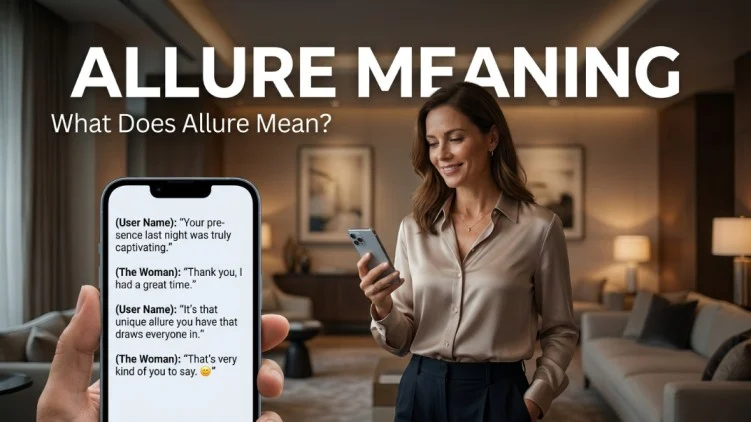
“There is a certain allure about you.”
You might reply:
“That is a very sweet thing to say.”
Or, if you want to flirt:
“Maybe you should stick around and figure it out.”
Professional Response
If someone says:
“The allure of this destination is its natural beauty.”
You can respond:
“I agree. Its scenery is one of its strongest attractions.”
If You Do Not Understand
You can simply ask:
“What do you mean by allure?”
There is nothing wrong with asking for clarification.
Regional or Cultural Differences
Allure is a standard English word and is understood across major English-speaking regions.
You can find it in American English, British English, Canadian English, Australian English, and other varieties of English.
The basic meaning remains the same, but its frequency can vary by context.
In everyday casual speech, people may be more likely to say:
“appeal”
or
“attraction.”
For example:
“What is the appeal of that place?”
sounds very natural in ordinary conversation.
Meanwhile:
“What is the allure of that place?”
sounds slightly more polished, literary, or sophisticated.
This makes allure particularly common in:
- Travel writing
- Fashion
- Beauty
- Luxury marketing
- Literature
- Lifestyle articles
- Magazine writing
- Descriptive storytelling
The word does not have a major slang meaning that changes dramatically from one English-speaking region to another.
However, cultural ideas about what is considered alluring can differ. Something viewed as mysterious or attractive in one culture may not have the same appeal somewhere else.
Comparison with Similar Terms
Although allure, appeal, attraction, and charm can sometimes be used interchangeably, they are not identical.
| Term | Meaning | Example |
|---|---|---|
| Allure | Strong or captivating attraction | “The city’s mysterious allure fascinated her.” |
| Appeal | Quality that makes something attractive | “The job has great appeal.” |
| Attraction | Something that draws interest | “The museum is a major attraction.” |
| Charm | Pleasant and often personal appeal | “The town has old-fashioned charm.” |
| Fascination | Powerful interest or curiosity | “He has a fascination with space.” |
| Magnetism | Powerful ability to attract people | “Her personality has natural magnetism.” |
Allure vs Appeal
Allure often feels more emotional, elegant, or mysterious.
Appeal is more neutral.
Allure vs Attraction
Attraction can be physical, emotional, practical, or general. Allure often suggests a stronger and more captivating quality.
Allure vs Charm
Charm usually feels warm and pleasant. Allure can feel more mysterious or seductive.
Allure vs Temptation
Temptation focuses on wanting something, especially something difficult to resist. Allure focuses more on the attractive quality itself.
Usage in Online Communities & Dating Apps
You may encounter allure on dating apps, social media, online forums, and gaming communities, especially when users want to sound descriptive or sophisticated.
On dating apps, someone might write:
“I love the allure of spontaneous adventures.”
Here, the person is saying that spontaneous adventures have a special attraction for them.
A profile might also say:
“I’m drawn to the allure of quiet places and deep conversations.”
This gives the profile a thoughtful and slightly poetic tone.
On social media, users may write:
“The allure of a weekend with no plans is unbeatable.”
In gaming communities, allure can describe a game’s appeal:
“The allure of this game is its open world and freedom.”
Tips for Responding Online
If someone uses the word naturally, you can respond with a similar level of language.
“I can definitely see the appeal.”
Or keep it casual:
“Yeah, I get why that’s so attractive.”
If someone uses allure in a romantic message, do not automatically assume it is a sexual comment. It usually means charm or attraction, but the surrounding conversation matters.
Hidden or Offensive Meanings
Allure does not have a standard offensive or hidden meaning.
It is generally a positive or neutral word.
However, the word can sometimes describe seductive attraction, especially when talking about a person.
For example:
“She had an undeniable allure.”
Depending on the context, this could suggest physical beauty, confidence, mystery, or romantic attraction.
That does not automatically make the sentence inappropriate.
The surrounding words determine the tone.
For example:
“The ancient building has an eerie allure.”
This means the building is strangely fascinating.
Meanwhile:
“Her mysterious personality had a powerful allure.”
This may suggest personal or romantic attraction.
Can allure sound suggestive?
Yes, in certain contexts.
But the word itself is not explicit or vulgar. It is often used in polished writing to describe attraction.
If you want completely neutral language, appeal or attraction may be safer choices.
Suitability for Professional Communication
Allure is appropriate for professional communication, especially when describing products, destinations, experiences, brands, designs, or consumer interest.
For example:
“The hotel’s coastal location adds to its allure.”
This is suitable for travel writing or marketing.
Another example:
“The product’s minimalist design contributes to its overall allure.”
This works well in business or product writing.
However, using allure to describe a coworker’s physical appearance may not be appropriate in a professional environment.
Instead of:
“Your appearance has a strong allure.”
A professional compliment might be:
“Your presentation was polished and engaging.”
In workplace communication, choose language based on the subject.
Professional Alternatives
Depending on your meaning, you can use:
- Appeal
- Attractiveness
- Value
- Interest
- Popularity
- Benefits
- Advantages
- Visual appeal
For example:
“The product has strong consumer appeal.”
This sounds direct and professional.
FAQs
What does allure mean in simple words?
Allure means a special quality that makes someone or something strongly attractive, interesting, or tempting.
Is allure a positive word?
Usually, yes. Allure often describes something appealing, fascinating, elegant, or mysterious, although it can also describe tempting things.
Can allure describe a person?
Yes. It can describe someone’s charm, beauty, confidence, mystery, or magnetic personality.
Does allure mean attraction?
They are closely related. Allure means a captivating quality that creates attraction, while attraction is the broader term.
Is allure romantic?
It can be romantic when describing a person’s charm or appeal, but it does not always have a romantic meaning.
What is the synonym of allure?
Common synonyms include appeal, attraction, charm, fascination, magnetism, and temptation, depending on the context.
How do you use allure in a sentence?
You can say, “The mysterious beauty of the old town added to its allure.” Here, allure means its special attraction.
Conclusion
The word allure describes a special kind of attraction that makes someone or something difficult to ignore. It can come from beauty, mystery, charm, elegance, excitement, confidence, or curiosity. Unlike simple attractiveness, allure often suggests that something has an extra quality that draws you closer.
You can use allure to describe a person, destination, product, lifestyle, idea, experience, or even temptation. It is common in everyday writing, travel, fashion, dating, social media, advertising, and professional communication.
Remember the simple idea: allure means captivating appeal. When you see the word in a sentence, look at what is creating the attraction. That context will usually tell you exactly what the writer means.
Discover More Post:
What Does “Habibti” Mean in English in 2026 – Punzelo.com
What Does FYM Mean in Text and Social Media – Punzelo.com
Missus Meaning | What Does “Missus” Mean in 2026