Quick Answer:
“Habibti” is an Arabic word that means “my beloved” or “my love” when speaking to a woman or girl. It is often used as a warm, affectionate, or romantic expression.
A single word can sometimes say what a whole sentence cannot. Habibti is one of those words. If you have seen it in a text, heard it in a song, or noticed someone using it on social media, you may wonder what this beautiful Arabic word really means.
For people learning Arabic, talking with Arabic-speaking friends, using dating apps, or simply exploring words from different cultures, understanding habibti meaning can make conversations much easier to follow. The word is often connected with love and affection, but it is not always romantic.
You may hear a mother call her daughter habibti, a friend use it with another friend, or a romantic partner say it in a loving message. Its meaning depends on the relationship, tone, and situation. That is what makes this small word so interesting.
Definition & Meaning
Habibti is an Arabic word that generally means “my beloved,” “my dear,” “my love,” or “my darling” when addressing a female.
The word comes from the Arabic root connected with love and affection. The masculine form is commonly written as habibi, while habibti is used when speaking directly to a woman or girl.
The difference is important:
| Word | Used for | Common meaning |
|---|---|---|
| Habibi | Male | My love, my dear, my beloved |
| Habibti | Female | My love, my dear, my beloved |
For example, a man might text his wife:
“Good morning, habibti.”
This can mean:
“Good morning, my love.”
But the word is not limited to romantic relationships.
A mother might say:
“Come here, habibti.”
In that situation, it could simply mean:
“Come here, my dear.”
A close friend may also use the word warmly:
“Thank you, habibti!”
This might mean:
“Thank you, dear!”
The word can therefore express affection, kindness, closeness, or love.
In Arabic-speaking cultures, affectionate words are often used more freely than English speakers might expect. Someone can use habibti without making a romantic statement.
Simple Examples
“I missed you, habibti.”
Meaning: “I missed you, my love.”
“Are you okay, habibti?”
Meaning: “Are you okay, my dear?”
“Good night, habibti.”
Meaning: “Good night, sweetheart.”
The exact English translation changes with the relationship and tone.
Background & History
The word habibti comes from Arabic and is related to the word habib, which means a beloved person or someone who is loved.
Arabic words often change their form based on grammar, gender, and who is being addressed. The ending “ti” in habibti signals that the person being addressed is female.
The related word habibi is used when addressing a male. Both forms carry the basic idea of affection or being beloved.
The root connected to these words is widely associated with love. From this same Arabic root, you can find several words connected with affection, friendship, and things that are loved.
Over many centuries, these expressions have remained part of everyday Arabic speech. They are used across different Arabic-speaking communities, although pronunciation and preferred expressions can vary by region.
You may hear habibti in countries such as Lebanon, Jordan, Syria, Palestine, Egypt, Saudi Arabia, Iraq, the Gulf states, and many other places where Arabic is spoken.
The word has also become familiar outside Arabic-speaking communities. Music, movies, television, social media, and online conversations have helped introduce habibi and habibti to people around the world.
Today, you might see the word written in several ways, including:
- Habibti
- Habibty
- Habibati
- Habebti
These spellings often represent attempts to write Arabic sounds using English letters. Habibti is one of the most common forms in English-language writing.
Usage in Various Contexts
The meaning of habibti changes depending on who says it and why.
1. Romantic Relationships
This is one of the most familiar uses.
“I love you, habibti.”
Here, the word clearly has a romantic meaning.
A partner may also say:
“Goodnight, habibti. Sleep well.”
In this situation, “my love” or “sweetheart” is a natural translation.
2. Family Conversations
A parent may call a daughter habibti.
Mother: “Come eat, habibti.”
Daughter: “Okay, Mom.”
There is nothing romantic about this use. It simply expresses affection.
3. Between Friends
Close female friends may sometimes use affectionate Arabic expressions with each other.
Friend 1: “You look amazing today, habibti!”
Friend 2: “Thank you!”
Here, it can mean something like “dear” or “sweetie.”
4. Texting
In messages, the word can make a sentence sound warmer.
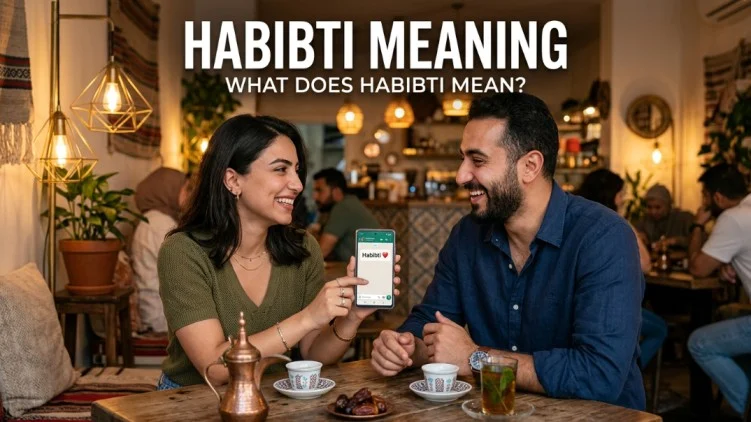
“Thank you for helping me, habibti ❤️.”
Depending on the relationship, this could be romantic or friendly.
5. Social Media
Someone might comment:
“Beautiful, habibti! ❤️”
The meaning could be affectionate, friendly, or romantic.
You should look at the relationship and the rest of the conversation before deciding what the person means.
6. Songs and Entertainment
You may hear habibti in Arabic songs, films, television shows, and online videos.
In music, the word is often connected with romantic love, longing, admiration, or emotional attachment.
7. Casual Conversations
Someone may use habibti simply to sound warm and caring.
“Don’t worry, habibti. Everything will be okay.”
Here, the word adds emotional warmth to the sentence.
Common Misconceptions & Clarifications
One of the biggest misconceptions about habibti is that it always means “girlfriend” or “romantic partner.”
That is not correct.
The word expresses affection, but affection can exist between romantic partners, family members, and close friends.
Another common misunderstanding is thinking that habibti can be used for anyone regardless of gender. Traditionally, habibti is the feminine form used when addressing a female. Habibi is the commonly used masculine form.
Is Habibti Always Romantic?
No.
Consider these two examples:
Boyfriend: “I miss you, habibti.”
This is likely romantic.
Mother: “Come here, habibti.”
This is affectionate but not romantic.
The same word can therefore have very different meanings.
Is Habibti Flirty?
It can be, but it depends on the speaker and context.
If someone you are dating calls you habibti, it may be romantic. If a family member uses it, it is obviously different.
Is Habibti Inappropriate?
The word itself is not inappropriate. It is a normal Arabic term of affection.
However, using intimate language with someone you do not know well may feel too personal in some situations.
Similar Terms & Alternatives
Arabic has many words and expressions that can communicate affection.
Habibi
Habibi is the masculine counterpart of habibti.
It is commonly translated as:
- My love
- My dear
- My beloved
- Darling
Ya Habibi
Ya habibi adds “ya,” an Arabic form of direct address.
It can be translated naturally as:
“Oh, my dear” or “My love.”
Ya Habibti
Similarly, ya habibti directly addresses a female.
Albi
Albi means “my heart.” It can be used as an affectionate expression.
Omri
Omri literally relates to “my life” and can be used affectionately, similar to saying “my life” or “my dear.”
| Arabic term | Common meaning | Gender/context |
|---|---|---|
| Habibti | My love, my dear | Female |
| Habibi | My love, my dear | Male |
| Ya habibti | Oh, my dear | Female |
| Ya habibi | Oh, my dear | Male |
| Albi | My heart | Affectionate |
| Omri | My life | Affectionate |
These expressions are not always perfect substitutes. Their meaning can change based on dialect and relationship.
How to Respond to This Term
How you respond to habibti depends on how the person is using it.
Casual Response
If a friend says:
“How are you, habibti?”
You can reply:
“I’m good! How are you?”
Affectionate Response
If your partner says:
“Good morning, habibti ❤️.”
You could reply:
“Good morning, habibi ❤️.”
This uses the masculine form if you are addressing a male.
Romantic Response
“Good morning, my love. I hope you slept well.”
Funny Response
If someone unexpectedly calls you habibti:
“Well, someone is feeling extra sweet today! 😂”
If You Are Unsure
If you do not know whether the person is being romantic, you can simply respond normally and watch the broader context.
You can also ask:
“Are you using habibti as a friendly nickname?”
There is no need to assume romance immediately.
If You Prefer Boundaries
If someone you barely know uses an affectionate term and you are uncomfortable, you can say:
“I appreciate the kindness, but I prefer being called by my name.”
That is polite and clear.
Regional or Cultural Differences
Arabic is spoken across a large and diverse region, so expressions of affection can vary from one country to another.
Habibti is broadly understood across Arabic-speaking communities, but pronunciation may differ.
In some regions, people may use other affectionate words more often in everyday conversation. Family relationships, age, local customs, and dialect can all affect how frequently affectionate terms are used.
For example, Arabic spoken in Egypt has its own pronunciation and vocabulary patterns. Levantine Arabic, Gulf Arabic, Iraqi Arabic, and North African varieties also have distinct features.
Even when pronunciation changes, the basic idea behind habibti remains familiar.
Cultural context is especially important for English speakers. In some Arabic-speaking families, affectionate words can be used very naturally between relatives and friends.
That means hearing someone say habibti does not automatically mean two people are dating.
A Useful Cultural Tip
Do not judge the meaning of habibti by the word alone.
Look at:
- Who said it
- Who received it
- Their relationship
- The surrounding conversation
- Their tone
- Whether the situation is romantic, friendly, or familial
This gives you a much more accurate interpretation.
Comparison with Similar Terms
English has several words that can translate habibti, but none matches every situation perfectly.
| Expression | Meaning | Typical feeling |
|---|---|---|
| Habibti | My love, my dear | Warm and affectionate |
| Darling | Dear person | Affectionate |
| Sweetheart | Loved or dear person | Warm |
| Honey | Term of affection | Casual and intimate |
| Dear | Beloved or valued person | Friendly or affectionate |
| My love | Romantic or affectionate | Often intimate |
| Sweetie | Dear person | Casual and friendly |
The closest English translation depends on the situation.
For a romantic partner:
Habibti = my love
For a family member:
Habibti = my dear
For a close friend:
Habibti = sweetheart or dear
This flexibility is one reason direct word-for-word translation does not always work.
Usage in Online Communities & Dating Apps
You may see habibti on Instagram, TikTok, X, Snapchat, Discord, Tinder, and other platforms.
Online, people often borrow words from other languages because they sound warm, playful, romantic, or culturally meaningful.
On dating apps, habibti can sometimes be used as a term of attraction.
For example:
“You look beautiful, habibti.”
If this comes from someone who is flirting with you, the word is probably romantic or flirtatious.
But online users also sometimes use Arabic words casually without being native Arabic speakers.
On Social Media
A friend might comment:
“Love this picture, habibti! ❤️”
This does not necessarily indicate romance.
In Gaming Communities
Players who speak Arabic may use affectionate expressions casually with teammates or friends.
“Nice game, habibti!”
The tone can be playful rather than romantic.
Dating Tip
If someone you just met calls you habibti, do not immediately assume they are making a serious romantic statement.
Look at their other messages.
If the conversation includes flirting, compliments, romantic emojis, or personal questions, the word may be part of a romantic approach.
If the conversation is friendly and casual, it may simply be an affectionate expression.
Hidden or Offensive Meanings
Habibti does not have a standard offensive or vulgar meaning.
Its normal meaning is affectionate and positive.
However, like many affectionate words, it can become uncomfortable when used in the wrong situation.
For example, someone who does not know you well might call you habibti to create a sense of closeness very quickly. Some people may enjoy this, while others may find it overly familiar.
Tone can also change the feeling.
Someone could use the word sarcastically:
“Sure, habibti. Whatever you say. 🙄”
Here, the word itself is still affectionate in its basic meaning, but the sarcastic tone changes the message.
It is also possible for non-Arabic speakers to misuse the word because they learned it from social media or entertainment.
That does not automatically make their use offensive, but it can sound unnatural if they use it without understanding the context.
Important Point
The word habibti is not a secret code for anything offensive.
If you see it in a message, start with its normal meaning and then use context to understand the speaker’s intention.
Suitability for Professional Communication
Habibti is generally not suitable for formal professional communication.
It is an affectionate term, so using it with a manager, client, professor, or professional contact could sound too personal.
For example, avoid writing:
“Thank you for your help, habibti.”
in a formal work email unless you have a very specific cultural or personal reason and already know the person well.
Instead, use professional language such as:
- Thank you
- Thank you very much
- I appreciate your help
- Dear [Name]
- Best regards
In informal workplaces, relationships can be more relaxed. Even then, it is better to understand the person’s preferences before using an affectionate Arabic term.
When It Is Appropriate
Personal conversation: Yes
Romantic conversation: Yes
Close friendships: Sometimes
Family conversation: Yes
Formal email: Usually no
Business proposal: No
Academic paper: No, unless discussing the word itself
FAQs
What does habibti mean?
Habibti is an Arabic term that usually means “my love,” “my dear,” “my darling,” or “my beloved” when addressing a female.
Is habibti romantic?
It can be romantic, especially when used by a romantic partner. However, family members and friends can also use it affectionately.
What is the difference between habibi and habibti?
Habibi is commonly used when addressing a male, while habibti is commonly used when addressing a female.
Can a friend call me habibti?
Yes. In many Arabic-speaking cultures, affectionate terms can be used between close friends. The relationship and tone determine the meaning.
What should I say when someone calls me habibti?
If the situation is friendly, you can simply continue the conversation. If it is romantic, you can respond with an affectionate phrase such as “habibi” when addressing a male.
Is habibti Arabic?
Yes. Habibti is an Arabic word formed from the root associated with love and affection.
Does habibti mean girlfriend?
No. Habibti does not literally mean “girlfriend.” It means something closer to “my beloved,” “my dear,” or “my love.” The relationship determines whether the use is romantic.
Conclusion
Habibti is a warm Arabic term that usually means “my love,” “my dear,” “my darling,” or “my beloved” when addressing a female. Although it is often associated with romance, the word can also be used between family members and close friends.
The most important thing to remember is that context matters. A boyfriend may use habibti romantically, while a mother may use the same word to show affection toward her daughter.
You may also see the word online, in songs, movies, social media comments, and dating conversations. If someone calls you habibti, look at your relationship with that person and the tone of the conversation before deciding what they mean.
Once you understand that flexibility, habibti becomes a simple and meaningful Arabic expression of affection.
Read More Related Articles:
What Does Encanto Mean| Complete Meaning, Origin, Usage …
What Does Bop Mean| Complete Meaning, Origin, Usage …