Quick answer:
Apres usually refers to the French word “après,” meaning “after.” In English, it is often used in phrases such as après-ski, meaning activities enjoyed after skiing.
A small word can sometimes carry a whole mood. You may have seen apres in a travel post, restaurant name, fashion caption, ski resort advertisement, or social media bio and wondered what it means. The word comes from French, where après means “after.” In English, it often appears in lifestyle phrases connected with what happens after an activity.
If you enjoy skiing, travel, fashion, food, social media, or learning unusual words, understanding apres meaning can make many expressions easier to understand. You may see phrases like après-ski, which describes social activities after skiing, or après-work, which refers to activities after work.
For language learners, travelers, and anyone who enjoys international culture, this word is useful because it often describes more than time. It can suggest relaxation, celebration, food, drinks, and socializing after the main event.
Definition & Meaning
The word après is French and directly means “after.”
In standard French, the accent matters. The correct spelling is après, with a grave accent over the è. In English writing, people sometimes leave off the accent and write apres.
The word describes something that happens after another event, activity, or point in time.
For example:
“Après le travail” means “after work.”
“ le dîner” means “after dinner.”
“Après la pluie” means “after the rain.”
However, English speakers often recognize the word through compound expressions rather than ordinary French sentences.
The most famous example is après-ski.
What Does Après-Ski Mean?
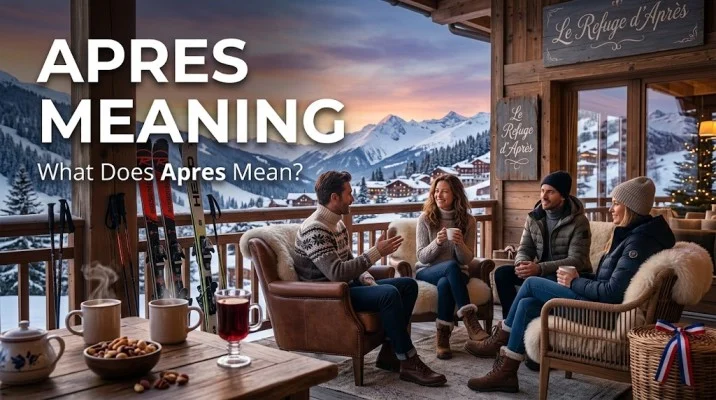
Après-ski literally means “after skiing.” In practice, it refers to the social activities people enjoy after spending time skiing.
These activities might include:
- Having drinks
- Eating dinner
- Listening to music
- Relaxing at a ski lodge
- Meeting friends
- Attending parties
- Sitting around a fireplace
For example:
“We spent the afternoon skiing and enjoyed some après-ski afterward.”
Here, après-ski does not simply mean the moment immediately after skiing. It often describes the entire social experience that follows.
The word can also appear in modern English lifestyle language.
Examples include:
après-work: activities after work
après-beach: activities after spending time at the beach
après-party: activities after a party
These creative expressions borrow the French word to give an activity a stylish or playful feel.
Background & History
Après comes from the French language and has been used in French for centuries. It developed from Latin roots and became part of the vocabulary of Old French before continuing into modern French.
In French, après is a normal everyday word. It is not limited to fashion, skiing, luxury travel, or social media.
For example:
“Je viens après.”
This can mean “I will come later” or “I will come afterward,” depending on context.
French speakers use après in ordinary sentences involving time and sequence.
The word became especially noticeable in English through the expression après-ski. Skiing culture helped spread the term beyond French-speaking communities. Ski resorts in the Alps and other popular skiing destinations used the expression to describe the food, drinks, music, and social events that take place after skiing.
Over time, après-ski became more than a simple description. It became associated with a particular lifestyle.
People began connecting it with:
- Ski lodges
- Warm clothing
- Hot drinks
- Cocktails
- Music
- Mountain restaurants
- Social gatherings
- Winter vacations
English speakers then started using après more creatively.
You may now see phrases such as après-work, après-beach, and other playful combinations online.
The original French word remains much broader, but English usage often gives it a fashionable or lifestyle-focused feeling.
Usage in Various Contexts
The meaning of apres changes slightly depending on the setting.
In French
In French, après simply means “after.”
Emma: “Tu viens après le déjeuner?”
Tom: “Oui, je viens après.”
Translation:
Emma: “Are you coming after lunch?”
Tom: “Yes, I’ll come afterward.”
In Travel Content
Travel bloggers may write:
“Perfect après-ski evening at the mountain lodge.”
Here, the phrase suggests relaxing and socializing after skiing.
On Social Media
Someone might post:
“Ski day complete. Time for some après! 🥂🏔️”
The person is probably talking about food, drinks, music, or relaxation after skiing.
In Fashion
Fashion brands sometimes use après in winter collections because it creates a connection with ski culture and luxury mountain vacations.
You might see phrases such as:
“Après-ski style”
This can describe clothing suitable for relaxing after skiing.
In Food and Restaurants
A restaurant might advertise an après-ski menu.
That usually means food and drinks designed for people coming back from the slopes.
In Casual English
People sometimes use après alone.
“Ready for après!”
This usually depends on the surrounding conversation. If the group has been skiing, it almost certainly means après-ski activities.
Common Misconceptions & Clarifications
One common misunderstanding is that après always means skiing.
That is not true.
The original French word après simply means “after.” Skiing became strongly associated with the word because of après-ski, but the word itself is much broader.
Another mistake is thinking that après means “before.”
It means the opposite.
Après = after
Avant = before
For example:
“Après le repas” means “after the meal.”
“Avant le repas” means “before the meal.”
Is Apres an English Word?
It is used in English, especially in borrowed expressions such as après-ski, but its origin is French.
Does Apres Mean Party?
Not by itself.
The word means “after.” A party can be part of what happens afterward, but the word does not literally mean party.
Does Après Always Need an Accent?
In French, the standard spelling is après.
English texts sometimes use apres without the accent, especially in brand names, casual writing, or internet content.
Is Après-Ski Only About Drinking?
No.
Drinks can be part of après-ski culture, but the term can include food, music, conversation, relaxation, and other social activities.
Similar Terms & Alternatives
Several words can express ideas similar to après, depending on the context.
After
This is the simplest English equivalent.
“We went for dinner after skiing.”
Afterwards
This means after that or later.
“We went skiing and ate afterward.”
Later
This can describe a later point in time.
“I’ll call you later.”
Post
English sometimes uses post- to mean something that happens after another event.
Examples:
- Post-work
- Post-game
- Post-match
- Post-party
Following
This can also indicate something that comes after another event.
“Following the meeting, we went to lunch.”
| Term | Meaning | Example |
|---|---|---|
| Après | After | Après le dîner |
| After | Following a time or event | After dinner |
| Afterwards | After that | We left afterwards |
| Later | At a later time | See you later |
| Post | After an event | Post-game interview |
| Following | After something | Following the meeting |
How to Respond to This Term
Your response depends on how someone uses après.
If Someone Says “Après-Ski”
You can respond naturally:
“That sounds fun!”
Or:
“Are you going to the lodge afterward?”
If Someone Uses “Après” Casually
If the context is clear, you can simply continue the conversation.
Friend: “Skiing first, après later?”
You: “Absolutely!”
If You Are Unsure
Ask:
“Do you mean après-ski?”
This is especially useful if someone uses après by itself.
Funny Response
If your friend says:
“Time for après!”
You could reply:
“My favorite part of skiing is apparently the part after skiing.” 😂
Professional Response
If you see the word in a work or business context and it refers to an event, respond according to the specific activity.
For example:
“Thanks. I’ll join the après-work gathering after the meeting.”
The key is to understand what event the word is referring to.
Regional or Cultural Differences
The word après is French, so it naturally has a strong place in French-speaking cultures. However, its use in English varies by region and community.
In France, après is an ordinary part of everyday language. A French speaker does not necessarily think of skiing or luxury when hearing it.
In English-speaking countries, the word can sound more specialized.
For many English speakers, the first association is après-ski.
This is especially common in places with strong skiing cultures, such as parts of the United States, Canada, the United Kingdom, and other countries where skiing is popular.
The cultural feeling can also change.
In French, après is simply vocabulary.
In English lifestyle language, après can sound:
- Stylish
- European
- Sophisticated
- Trendy
- Leisure-focused
This difference is important because the word’s basic meaning does not change, but its social feeling can.
Comparison with Similar Terms
Understanding the difference between après, après-ski, and related English expressions can prevent confusion.
| Expression | Meaning | Common Context |
|---|---|---|
| Après | After | French language |
| Après-ski | Activities after skiing | Ski resorts |
| After | Following something | Everyday English |
| Afterwards | After an event | Everyday conversation |
| Post-work | After work | Workplace/social |
| Post-game | After a game | Sports |
| After-party | Party after an event | Entertainment |
| Après-work | Social activities after work | Lifestyle language |
The important distinction is that après does not automatically describe a social event.
For example:
“Après le travail” simply means “after work.”
But:
“Après-work drinks” can suggest drinks or socializing after work.
The surrounding words create the specific meaning.
Usage in Online Communities & Dating Apps
The word après occasionally appears in online communities, especially around travel, skiing, fashion, food, and lifestyle content.
On Instagram, TikTok, Pinterest, and travel blogs, you might see:
“Apres vibes 🏔️🍷”
This usually creates an image of relaxing after a day on the slopes.
On dating apps, someone might write:
“Ideal date: skiing, followed by après drinks.”
Here, the person is describing a social activity after skiing.
Someone might also write:
“Looking for someone who loves ski trips and après.”
The meaning is likely connected to enjoying the social side of skiing.
Gaming Communities
Gaming communities sometimes borrow après playfully.
For example:
“Ranked matches are done. Après gaming time.”
This is not standard French. It is a creative English use based on the idea of doing something after the main activity.
Online Tip
Do not assume that every use of après is literal French. Online communities often borrow foreign words to create a certain style or mood.
Hidden or Offensive Meanings
There is no widely recognized offensive meaning attached to the standard French word après.
Its normal meaning is simply “after.”
Likewise, après-ski is not inherently offensive. It usually describes social activities after skiing.
However, context can change how any expression feels.
For example, a person might use “après” sarcastically to imitate a fashionable lifestyle.
“Look at us, all fancy with our après.” 😂
This is playful rather than offensive.
The word can also be used in marketing to create a luxury image. That does not change its actual meaning.
If someone uses it in a suggestive joke, the suggestion would come from the surrounding conversation, not from the word après itself.
When you see the word online, look at the words around it before deciding what the speaker means.
Suitability for Professional Communication
The word après can appear in professional communication, but its suitability depends on the context.
In French, après is completely normal and can be used in formal writing.
For example:
“Après la réunion, nous enverrons le rapport.”
This means:
“After the meeting, we will send the report.”
In English business communication, however, after is usually clearer.
Instead of:
“Après the meeting”
write:
“After the meeting.”
If you are using an established phrase such as après-ski, the term can be perfectly acceptable.
For example:
“The resort offers an après-ski networking event.”
This sounds natural in travel, hospitality, tourism, and lifestyle industries.
Professional Alternatives
For clear business writing, consider:
- After
- Afterward
- Following
- Post-event
- After the meeting
- After work
The French term is best used when it adds meaning or fits the established expression.
FAQs
What does apres mean?
Apres, properly written après in French, means “after.” In English, it is often seen in expressions such as après-ski.
What does après-ski mean?
Après-ski means the social activities that take place after skiing, such as eating, drinking, relaxing, listening to music, or spending time with friends.
Is apres a French word?
Yes. Après is a French word meaning “after.”
What is the difference between apres and after?
They have the same basic meaning, but après is French while after is English.
Why do people say après-ski?
People use après-ski to describe activities and socializing after skiing. The phrase has become strongly associated with ski resort culture.
Is apres slang?
No. Après is a standard French word. Some English expressions using it can have a trendy or informal lifestyle feel.
How do you pronounce apres?
The French word après is roughly pronounced “ah-preh,” with the second syllable receiving the main stress.
Conclusion
The apres meaning is simple at its core: the French word après means “after.” Its most familiar English use appears in après-ski, which describes the food, drinks, entertainment, and social activities people enjoy after skiing.
You may also see the word in fashion, travel, social media, restaurants, and creative lifestyle phrases such as après-work. In French, however, après is much more ordinary and can be used in everyday sentences about time and sequence.
Remember the basic idea: après means after. When it appears in a longer expression, look at the word that follows it to understand the exact context. Once you know this, phrases containing après become much easier to understand.
Discover More Post:
- What Does FYM Mean in Text and Social Media – Punzelo.com
- What Does “Habibti” Mean in English in 2026 – Punzelo.com
- What Does TTYL Mean| Complete Meaning, Origin, Usage …