Quick Answer:
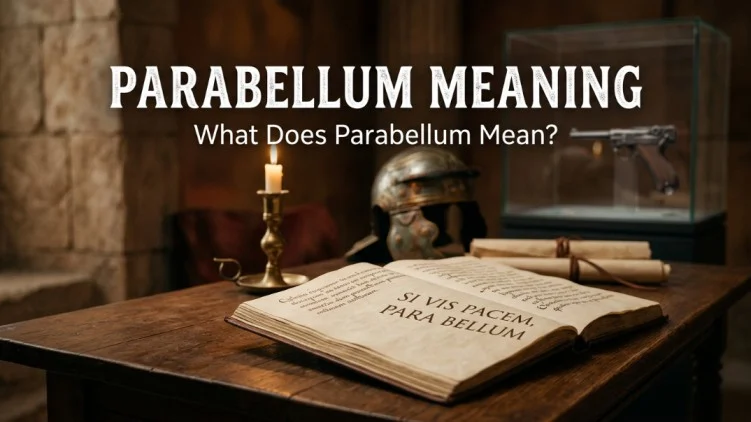
Parabellum is a Latin phrase meaning “prepare for war.” It is best known from the saying Si vis pacem, para bellum, meaning “If you want peace, prepare for war.”
A single Latin phrase can carry a much bigger idea than its two words suggest. Parabellum is one of those terms. You may have seen it in history books, movies, video games, military discussions, or the name of a well known ammunition cartridge. If you are wondering about the parabellum meaning, the basic answer is simple: it means “prepare for war.”
The word is especially interesting because its meaning changes with context. In a historical or philosophical discussion, it can describe the idea that being prepared for conflict can help protect peace. In firearms history, Parabellum became strongly associated with the 9×19mm Parabellum cartridge and the famous Luger pistol. You may also encounter the term in entertainment, online communities, and popular culture.
Whether you are a student, history reader, gamer, language learner, or simply someone who came across the word online, understanding its origin makes it much easier to understand what people mean when they use it.
Definition & Meaning
Parabellum comes from Latin and is commonly translated as “prepare for war.”
It comes from the phrase:
“Si vis pacem, para bellum.”
This translates as:
“If you want peace, prepare for war.”
The phrase is commonly associated with the Roman writer Vegetius and his work De Re Militari. The broader idea is that maintaining peace may require readiness to defend yourself or your society.
The word itself can be understood from its Latin parts:
para means “prepare” or “make ready.”
bellum means “war.”
Together, para bellum means “prepare for war.”
Why Do People Use “Parabellum” Today?
The word became especially famous outside classical Latin because of its connection to firearms history.
The 9×19mm Parabellum, also called 9mm Luger or 9mm Parabellum, is a widely known pistol and submachine gun cartridge. The name became associated with the cartridge through the German arms company Deutsche Waffen- und Munitionsfabriken, commonly known as DWM.
The term can therefore have two major meanings:
| Context | Meaning |
|---|---|
| Latin phrase | Prepare for war |
| Philosophy | Readiness intended to help preserve peace |
| Military history | Preparation for armed conflict |
| Firearms history | Name associated with the 9×19mm cartridge |
| Popular culture | A reference to war, preparation, or firearms |
For example:
“Si vis pacem, para bellum.”
A natural English translation is:
“If you want peace, prepare for war.”
The phrase does not necessarily mean that someone wants war. Its traditional idea is about readiness and deterrence.
Background & History
The roots of parabellum are found in Latin. The phrase became famous through the Roman military writer Publius Flavius Vegetius Renatus, commonly known as Vegetius.
His work De Re Militari discussed military organization, training, discipline, and preparation. The phrase commonly rendered as “If you want peace, prepare for war” became closely connected with the broader idea that a society should remain prepared to defend itself.
The phrase became influential long after the Roman period. Writers, military thinkers, politicians, and historians have used variations of the idea when discussing national defense and diplomacy.
Over time, parabellum also developed a major connection with firearms.
In the early twentieth century, the term was associated with the 9×19mm Parabellum cartridge, developed by German firearms designer Georg Luger. The cartridge was introduced in connection with the Luger pistol and became known internationally.
This is why the word can sometimes seem confusing. Someone discussing ancient Latin may use parabellum as part of a philosophical phrase, while someone discussing firearms history may use it as part of a cartridge name.
Modern popular culture has expanded its recognition even further. Movies, television, games, books, and online discussions sometimes use Parabellum as a title or reference because the word sounds strongly connected to conflict, military history, and preparation.
The term is therefore much older than its modern firearms association. Its original linguistic meaning comes from Latin, while its modern technical use developed centuries later.
Usage in Various Contexts
The meaning of parabellum depends heavily on where you encounter it.
1. Historical Writing
A history book might say:
“The phrase para bellum became associated with the idea of military readiness.”
Here, the focus is philosophical and historical.
2. Military Discussions
Someone discussing defense strategy might write:
“The old idea behind para bellum is still debated today.”
In this context, the person is talking about preparation and deterrence.
3. Firearms History
You may see:
“The 9×19mm Parabellum became an important military cartridge.”
Here, Parabellum is part of a technical name rather than a direct instruction to prepare for war.
4. Movies and Entertainment
The word is also used in entertainment titles. A well known example is John Wick: Chapter 3, Parabellum.
In that context, the title uses the word to suggest conflict, danger, and preparation.
5. Gaming
Players may encounter the word in games featuring historical weapons or military themes.
For example:
Player 1: “What does Parabellum mean?”
Player 2: “It is Latin for ‘prepare for war.’ It is also connected with the 9mm cartridge.”
6. Online Discussions
Someone on a history forum might write:
“I keep seeing the phrase ‘si vis pacem, para bellum.’ What does it mean?”
A simple response would be:
“It means ‘if you want peace, prepare for war.’”
The word can therefore appear in language discussions, history forums, military history communities, gaming spaces, and entertainment conversations.
Common Misconceptions & Clarifications
One common misunderstanding is that parabellum simply means “war.”
That is not correct.
The Latin word for war is bellum. The word para contributes the idea of preparing or making ready. Therefore, para bellum means “prepare for war.”
Another common mistake is treating Parabellum as a modern military slogan with no historical background. The phrase has much older Latin roots.
Does Parabellum Mean “For War”?
You may see it translated loosely as “for war,” especially when discussing names or products.
However, the phrase para bellum is more accurately understood as “prepare for war.”
Is Parabellum a Latin Word?
It is based on Latin. More precisely, para bellum is a Latin phrase, while parabellum is often written as one word in modern names and terminology.
Is It Always About Weapons?
No.
The original phrase is about preparation for war, but people can discuss it in philosophical, historical, political, linguistic, and cultural contexts.
Is Parabellum a Threat?
Not automatically.
Using the word does not necessarily mean someone is threatening another person. Context is essential.
For example:
“I studied the phrase para bellum in Roman history.”
This is simply an academic statement.
Similar Terms & Alternatives
Several expressions are related to the idea behind parabellum.
“Si Vis Pacem, Para Bellum”
This is the complete and most famous phrase.
It means:
“If you want peace, prepare for war.”
“Prepare for War”
This is the most direct English translation of para bellum.
“Be Prepared”
This has a broader meaning. It does not specifically refer to war.
“Deterrence”
Deterrence refers to discouraging an action by making the potential consequences clear or by maintaining the ability to respond.
It is related to the idea behind the phrase, but it is not a direct translation.
“Readiness”
Readiness means being prepared to act when necessary.
“Defense”
Defense focuses on protecting against attack or harm.
| Term | Meaning | Relationship to Parabellum |
|---|---|---|
| Parabellum | Prepare for war | Original Latin concept |
| Si vis pacem, para bellum | If you want peace, prepare for war | Complete phrase |
| Readiness | Being prepared | Related idea |
| Deterrence | Discouraging aggression | Related strategic concept |
| Defense | Protection against attack | Related military concept |
| Be prepared | Ready for possible events | Broader expression |
How to Respond to This Term
If someone uses parabellum in conversation, your response should depend on the context.
Casual Response
“It means ‘prepare for war,’ right?”
This is a simple way to confirm what the person means.
Curious Response
“I know the phrase, but I did not realize Parabellum was also connected to firearms history.”
This works well in a history conversation.
Funny Response
Friend: “Si vis pacem, para bellum.”
You: “I was hoping ‘prepare for snacks’ was the Latin version.”
This keeps the conversation light without changing the historical meaning.
Academic Response
“The phrase is associated with the idea that military preparedness can contribute to deterrence and peace.”
This works better in a classroom or formal discussion.
If You Are Unsure
Simply ask:
“Are you talking about the Latin phrase or the 9mm cartridge?”
That question is useful because Parabellum can refer to different things depending on the subject.
Regional or Cultural Differences
The basic Latin meaning of parabellum does not change much between countries. However, its popularity and associations can differ depending on culture and language.
People who study Latin, Roman history, military history, or philosophy may recognize para bellum as part of the famous saying about peace and preparation.
In countries where firearms terminology is more common, Parabellum may immediately remind people of the 9×19mm cartridge.
English speakers may encounter the term through movies, video games, books, and military discussions. German speakers may encounter it in historical firearms terminology, while people studying Romance languages may recognize its Latin roots.
Popular culture has also helped spread the word internationally.
For example, the title John Wick: Chapter 3, Parabellum introduced the word to many viewers who had never studied Latin or firearms history.
This creates an interesting situation where the same term can suggest different things:
Latin student: “It means prepare for war.”
Firearms enthusiast: “It is part of a cartridge name.”
Movie fan: “It reminds me of John Wick.”
All three associations can be correct, but the intended meaning depends on the conversation.
Comparison with Similar Terms
Understanding similar expressions makes the meaning of parabellum easier to remember.
| Expression | Meaning | Main Context |
|---|---|---|
| Para bellum | Prepare for war | Latin |
| Si vis pacem, para bellum | If you want peace, prepare for war | Philosophy and history |
| Bellum | War | Latin |
| Pax | Peace | Latin |
| Deterrence | Discouraging an attack | Defense and strategy |
| Readiness | Being prepared | General use |
| Defense | Protection from attack | Military and general use |
| Preparedness | State of being ready | General or strategic use |
The biggest distinction is between bellum and para bellum.
Bellum = war
Para bellum = prepare for war
This small difference matters because it changes the entire meaning.
Another important distinction is between para bellum and si vis pacem, para bellum.
The first is the shorter phrase.
The second is the complete saying:
“If you want peace, prepare for war.”
Usage in Online Communities & Dating Apps
You are more likely to see parabellum in history, gaming, entertainment, or military related online communities than in ordinary dating conversations.
On platforms such as X, Reddit, Discord, gaming communities, and social media, people may use the word while discussing movies, historical events, military history, or weapons terminology.
For example:
“I finally watched John Wick 3. Now I understand why they called it Parabellum.”
Someone else might respond:
“The title refers to the Latin phrase about preparing for war.”
In gaming communities, the word can appear in discussions about historical weapons or realistic military games.
What About Dating Apps?
If someone puts Parabellum in a dating profile, do not automatically assume it has a threatening meaning.
It could be:
- A movie reference
- A history interest
- A Latin phrase they like
- A gaming reference
- A firearms history reference
- A username or nickname
For example:
Profile: “History nerd. Si vis pacem, para bellum.”
This may simply indicate an interest in classical history or military philosophy.
The safest approach is to consider the rest of the profile before making assumptions.
If the term appears alongside content that genuinely makes you uncomfortable, you can always choose not to engage.
Hidden or Offensive Meanings
Parabellum does not have a widely recognized hidden offensive meaning in standard English.
Its historical meaning is connected to preparing for war, so it can sound intense or aggressive. However, the word itself is not a slur or inherently insulting expression.
Its tone depends on context.
For example:
“The historian explained the meaning of para bellum.”
This is neutral.
“He used Parabellum as the name of his fictional army.”
This is fictional and dramatic.
“Si vis pacem, para bellum.”
This can be philosophical or strategic.
The word can also be used in entertainment to create a sense of danger or conflict.
If someone uses parabellum in a username, caption, or message, it is better not to assume their intentions from the word alone.
Important Clarification
The term has a strong association with firearms because of 9×19mm Parabellum, but knowing or using the word does not automatically indicate a person’s beliefs, intentions, or behavior.
Context remains the key.
Suitability for Professional Communication
Parabellum can be appropriate in professional communication when the subject requires it.
For example, a historian might write:
“The phrase si vis pacem, para bellum has influenced discussions of military preparedness.”
A firearms historian might write:
“The 9×19mm Parabellum became an important cartridge in modern firearms history.”
A university lecturer could discuss the Latin phrase in a lesson about Roman literature or military thought.
However, simply using parabellum as a dramatic slogan may not be appropriate in every workplace.
If your audience may not know Latin, explain the term when you first use it.
For example:
“The Latin phrase para bellum, meaning ‘prepare for war,’ reflects the idea of maintaining readiness for defense.”
That is clearer than using the word without explanation.
Professional Alternatives
Depending on your intended meaning, you could use:
- Preparedness
- Readiness
- Defense
- Strategic preparedness
- Military readiness
- Deterrence
- Peace through preparedness
These alternatives are often easier for a general professional audience to understand.
FAQs
What does Parabellum mean?
Parabellum comes from Latin and means “prepare for war.” It is best known from the phrase si vis pacem, para bellum.
What does “si vis pacem, para bellum” mean?
It means “If you want peace, prepare for war.” The phrase expresses the idea that readiness for defense can help deter conflict.
Is Parabellum Latin?
Yes. Para bellum is a Latin phrase. Para relates to preparing, while bellum means war.
Why is 9mm called Parabellum?
The name 9mm Parabellum comes from the broader Latin phrase and became associated with the 9×19mm cartridge developed in Germany in the early twentieth century.
Does Parabellum mean war?
Not exactly. Bellum means “war,” while para bellum means “prepare for war.”
Is Parabellum a military word?
It can be used in military and historical contexts, but its roots are in Latin. Today, it is also strongly associated with firearms terminology and popular culture.
Why is Parabellum associated with John Wick?
John Wick: Chapter 3 uses Parabellum in its title. The word adds a historical and conflict related meaning that fits the movie’s themes.
Conclusion
The parabellum meaning is simple once you know its Latin roots. Para bellum means “prepare for war,” and it is most famously found in the saying si vis pacem, para bellum, meaning “If you want peace, prepare for war.”
The term has a long history connected to ideas of military preparedness, defense, and deterrence. It later became strongly associated with the 9×19mm Parabellum cartridge, which is why the word is also common in firearms history.
Today, you may encounter Parabellum in history books, military discussions, gaming communities, movies, social media, and popular culture. Its meaning is not automatically aggressive or offensive. The surrounding context tells you what the speaker actually means.
When you see the word, remember its two main associations: the Latin idea of preparing for war and the historical firearms term.
Discover More Post:
What Does UwU Mean| Complete Meaning, Origin, Usage …
What Does Collate Mean| Complete Meaning, Origin, Usage …
What Does WTW Mean| Complete Meaning, Origin, Usage …