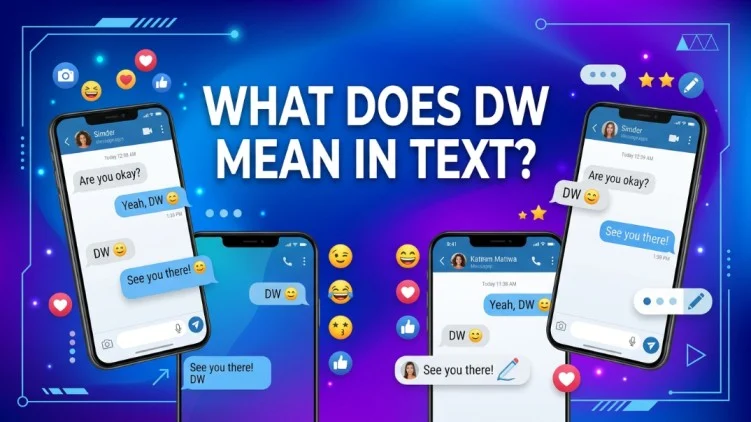
You receive a message saying “DW, everything is fine,” and suddenly wonder whether the sender is reassuring you or using another meaning. If you’ve searched for what does DW mean in text, the good news is that the answer is usually simple. In most text conversations, DW stands for “Don’t Worry.”
Even though that’s the most common meaning, context still matters. The same abbreviation may appear in different conversations, platforms, or communities with slightly different interpretations. Below, you’ll learn its meaning, common uses, examples, tone, replies, and when you should or shouldn’t use it.
What Does DW Mean?
The abbreviation DW most commonly means “Don’t Worry.”
People use it to reassure someone, reduce concern, or tell another person that a situation isn’t a problem. It’s a casual expression commonly seen in text messages, social media chats, and messaging apps.
| Detail | Explanation |
|---|---|
| Most Common Meaning | Don’t Worry |
| Full Form | Don’t Worry |
| Tone | Friendly and reassuring |
| Common Platforms | Text messages, Snapchat, Instagram, WhatsApp, Discord |
| Formal or Informal | Informal |
The Main Meaning of DW in Text
When someone writes “DW,” they’re usually telling you not to stress about something.
It’s a quick way to comfort another person without typing the full phrase. Friends, classmates, family members, and coworkers often use it during casual conversations.
Example:
Person A: “Sorry I’m running late.”
Person B: “DW, I’m still getting ready.”
Meaning: The second person is reassuring their friend that being late isn’t a problem.
Because it’s short and friendly, DW helps conversations feel relaxed instead of overly formal.
Read next: Related texting abbreviations and chat slang meanings.
Alternative Meanings of DW
Although “Don’t Worry” is by far the most common meaning in texting, DW can represent different things in other settings.
| Meaning | Context | Tone | Example |
|---|---|---|---|
| Don’t Worry | Texting and social media | Friendly | “DW, I’ll handle it.” |
| Dear Wife | Family discussions or forums | Neutral | “DW loves traveling.” |
| Dead Weight | Gaming or sports slang | Negative | “He called me dead weight.” |
| Deutsche Welle | News organization | Neutral | “I watched DW News.” |
When chatting with friends, assume DW means “Don’t Worry” unless the conversation clearly points toward another meaning.
How Context Changes the Meaning
The surrounding conversation usually makes the intended meaning obvious.
- If someone apologizes and receives “DW,” it’s almost certainly saying not to worry.
- If people are discussing family members, “DW” could mean “Dear Wife.”
- If gamers are criticizing teammates, “dead weight” may be the intended meaning.
Examples:
Message: “DW, you didn’t do anything wrong.”
Meaning: Reassurance.
Message: “My DW booked the vacation.”
Meaning: Dear Wife.
Message: “Stop being DW in ranked games.”
Meaning: Dead Weight.
Always read the sentences before and after the abbreviation instead of assuming only one meaning.
What Does DW Mean on Different Platforms?
Text Messages, WhatsApp, and iMessage
DW almost always means “Don’t Worry.”
Example:
“DW, I’ll call you later.”
The tone is warm, supportive, and casual.
Snapchat and Instagram
People often use DW while chatting with friends or replying to stories.
Example:
“DW 😂 It happens.”
The emoji makes the reassurance feel even friendlier.
Discord and Gaming Chats
Most conversations still use “Don’t Worry,” although some gaming communities occasionally use “Dead Weight.”
Example:
“DW, we’ll win next round.”
The meaning depends on whether teammates are encouraging each other or criticizing gameplay.
TikTok Comments
On TikTok, DW generally keeps the same meaning.
Example:
“DW, everyone makes mistakes.”
The abbreviation is commonly used to comfort creators or other commenters.
Read next: Another popular texting abbreviation explained.
Real Conversation Examples
Friend Chat
Person A: “I forgot your birthday.”
Person B: “DW, we’ll celebrate this weekend.”
Meaning: Reassurance.
Family Conversation
Person A: “I accidentally broke the plate.”
Person B: “DW, accidents happen.”
Meaning: Comforting someone.
School Chat
Person A: “I couldn’t finish the homework.”
Person B: “DW, the teacher extended the deadline.”
Meaning: Reducing stress.
Work Chat
Person A: “Sorry for sending the file late.”
Person B: “DW, I hadn’t checked my messages yet.”
Meaning: Letting someone know there’s no issue.
Dating Conversation
Person A: “Sorry I replied late.”
Person B: “DW 😊 I figured you were busy.”
Meaning: Friendly reassurance.
Tone and Emotional Meaning
DW usually sounds kind and supportive.
The exact tone depends on punctuation, emojis, and the relationship between the people talking.
Is DW Rude?
No. It’s generally considered polite and reassuring.
However, replying with only “DW” after someone shares something emotional may feel slightly dismissive if you don’t add any extra words.
Better:
“DW. I’m here if you need anything.”
Less caring:
“DW.”
Is DW Flirty?
Not by itself.
If paired with affectionate messages or heart emojis, it can sound warm or caring, but the abbreviation alone isn’t considered flirtatious.
Examples:
“DW ❤️ I’ll wait for you.”
“DW 😊 You’re worth waiting for.”
The surrounding message creates the tone rather than the abbreviation itself.
How to Reply to DW
Friendly Replies
“No problem, thanks.”
“I appreciate it.”
“That’s good to hear.”
“Thanks for understanding.”
“Glad everything’s okay.”
Funny Replies
“Too late, I already worried.”
“My superpower is worrying anyway.”
“I’ll try my best not to panic.”
“Mission accomplished, stress canceled.”
Replies When You’re Still Unsure
“What happened exactly?”
“Can you explain a little more?”
“Okay, thanks for letting me know.”
When You Should Use DW
DW works best in casual conversations where both people understand common texting abbreviations.
Good situations include:
Friends chatting.
Family messages.
Group chats.
Social media conversations.
Gaming chats.
Quick replies on messaging apps.
It’s useful when you want to reassure someone without writing a long sentence.
When You Should Avoid DW
There are times when writing the complete phrase is a better choice.
Avoid using DW in:
Professional emails.
Job applications.
Business communication.
Academic assignments.
Formal announcements.
Conversations where someone may not recognize texting abbreviations.
If the situation is serious or emotional, writing “Don’t worry, I’m here to help” often feels more thoughtful than simply saying “DW.”
Common Mistakes
| Common Mistake | Correct Understanding |
|---|---|
| Thinking DW always has one meaning | Context may change its meaning. |
| Using DW in formal emails | Write the complete phrase instead. |
| Assuming it is rude | It is usually friendly and reassuring. |
| Ignoring the conversation topic | Context identifies the intended meaning. |
Similar Slang Terms
| Term | Meaning | Main Difference |
|---|---|---|
| NVM | Never Mind | Changes the topic instead of reassuring someone. |
| IDC | I Don’t Care | Can sound dismissive, unlike DW. |
| NP | No Problem | Responds to thanks rather than calming worries. |
| TBH | To Be Honest | Introduces an honest opinion, not reassurance. |
| BRB | Be Right Back | Indicates a temporary absence instead of comfort. |
Origin and Popularity
The exact first use of DW in texting isn’t clearly documented.
Like many chat abbreviations, it became popular because people wanted faster ways to communicate through SMS, instant messaging, and later social media platforms. Today, “Don’t Worry” remains the most widely recognized meaning in everyday online conversations.
Quick Recap
DW usually means “Don’t Worry.”
It is most often used to reassure someone.
Context helps identify alternative meanings.
The abbreviation is best suited for casual conversations.
Friendly replies acknowledge the reassurance while keeping the conversation natural.
Frequently Asked Questions
What does DW mean in text?
DW most commonly means “Don’t Worry” and is used to reassure someone during casual conversations.
What does DW stand for?
It usually stands for “Don’t Worry,” although other meanings exist in different contexts.
What does DW mean on TikTok?
On TikTok, DW almost always means “Don’t Worry” in comments, captions, and direct messages.
How should you reply to DW?
A simple thank you or acknowledgment is usually the most natural response after someone reassures you.
Can DW have different meanings?
Yes, although “Don’t Worry” is the most common meaning, context can indicate alternatives like “Dear Wife” or “Dead Weight.”
Final Thoughts
Understanding what does DW mean in text makes online conversations much easier to follow. In most cases, it simply means “Don’t Worry” and is used to comfort or reassure someone. While a few alternative meanings exist, the surrounding conversation almost always reveals the intended definition. When you use DW, keep your audience and the situation in mind. It’s perfect for casual chats with friends, family, and social media contacts, while full phrases are usually a better choice in formal or professional communication.
Discover More Post:
What Does Contingent Mean| Complete Meaning, Origin …
Complete Meaning, Origin, Usage, Examples & Legal Guide
What Does the Green Dot Mean on Snapchat – Punzelo.com