Quick answer:
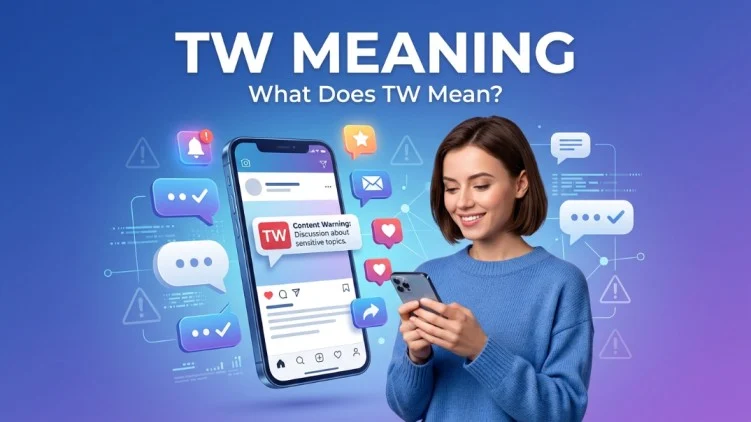
“TW” most commonly means “trigger warning” online, especially before sensitive content. It can also mean Twitter, depending on the context.
Two small letters can change the meaning of an entire message. If someone writes “TW: violence” before a post, they are giving readers a warning about sensitive content. But if someone says “I saw it on TW”, they may be referring to Twitter. So, what is the real TW meaning?
The answer depends on where you see it and how it is being used. You may find TW in texts, social media posts, comments, forums, group chats, gaming communities, or casual conversations. It is especially common when people want to warn others about difficult topics before sharing them.
If you are a student, social media user, gamer, content creator, or someone who often chats online, understanding TW can help you avoid confusion. It can also help you respond with the right tone.
Let’s break down the common meanings of TW, how people use it, and when you should use or avoid it.
Definition & Meaning
TW is an abbreviation with more than one meaning. The most common meaning in modern online communication is “trigger warning.”
A trigger warning is a short notice placed before content that may be upsetting or emotionally difficult for some people.
For example:
“TW: self-harm”
This tells readers that the content that follows discusses self-harm.
Another example is:
“TW: graphic violence”
The writer is warning readers that the post contains or discusses violent material.
A trigger warning does not necessarily mean that the content is harmful to everyone. Instead, it gives people a chance to decide whether they want to continue reading, watching, or listening.
TW Can Also Mean Twitter
Before Twitter was rebranded as X in 2023, some people used TW as a short way to refer to Twitter.
For example:
“I saw that video on TW.”
Depending on the speaker and the time of the conversation, they may mean Twitter.
However, this usage is less clear today because Twitter is now officially known as X.
Other Possible Meanings
TW can also have specialized meanings in different communities. For example, a person might use it as an abbreviation for a phrase, organization, game term, workplace expression, or username.
That is why you should always look at the surrounding message.
| TW usage | Meaning | Common setting |
|---|---|---|
| TW: abuse | Trigger warning | Social media |
| TW: blood | Trigger warning | Posts and forums |
| On TW | Older social media references | |
| TW in a specialized community | Context-specific term | Work, gaming, or hobbies |
The most important rule is simple: context determines meaning.
Background & History
The abbreviation TW became especially common as online communities developed their own ways of discussing sensitive subjects.
As people began sharing personal experiences, news, stories, images, and discussions online, users needed quick ways to alert others about difficult material. A short warning at the beginning of a post became an easy solution.
Instead of writing:
“This post contains discussion of domestic violence, so please be aware before reading.”
Someone could simply write:
“TW: domestic violence”
This made warnings easier to notice, especially on platforms where users scroll quickly.
The idea of warning people about sensitive content existed before social media, but online communities helped make abbreviations such as TW part of everyday digital communication.
The term became especially familiar in communities focused on mental health, personal experiences, trauma, activism, fandoms, and sensitive social issues.
Twitter Connection
TW has also been associated with Twitter, especially in older online conversations.
For years, Twitter was one of the biggest social platforms for short posts and real-time discussions. Some users shortened the name to TW in casual writing.
For example:
“Did you see the latest post on TW?”
The meaning was usually clear from the context.
Since Twitter became X, this use can now create confusion. Someone who sees “TW” today may be more likely to interpret it as trigger warning, especially when it appears at the beginning of a post.
The abbreviation therefore shows how internet language can change as platforms, communities, and online habits change.
Usage in Various Contexts
The most common use of TW is as a warning before sensitive material.
1. Social Media
A creator may write:
“TW: animal injury”
This lets followers know what the post contains before they open it.
2. Texting
A friend might send:
“TW: spoilers for the new episode.”
Technically, this is not always a traditional trigger warning. Some people use TW more loosely as a quick warning about content they think others may want to avoid.
3. Forums
A forum user might write:
“TW: eating disorders”
before describing a personal experience.
The warning gives readers more control over what they choose to read.
4. Gaming Communities
Gaming posts sometimes use TW for:
“TW: horror imagery”
or
“TW: violence.”
This can be useful when discussing games with disturbing scenes.
5. Group Chats
Someone might write:
“TW: spoilers!”
before revealing an important plot detail.
Again, this is a broader and more casual use of the abbreviation.
6. Casual Conversation
People sometimes say:
“TW, this story gets really sad.”
The speaker is warning the listener that the story contains emotionally difficult material.
Natural Dialogue Example
Maya: “I’m about to send you the article.”
Sara: “Okay.”
Maya: “TW: it discusses abuse.”
Sara: “Thanks for warning me.”
This is a simple and respectful use.
Common Misconceptions & Clarifications
One common misunderstanding is that TW always means trigger warning. While that is probably the first meaning many online users will recognize, it is not the only one.
Context matters.
TW Does Not Mean the Content Is Automatically Bad
A trigger warning does not mean the writer believes everyone should avoid the content.
It simply gives people information before they encounter something potentially upsetting.
For example:
“TW: grief”
does not mean that talking about grief is wrong. It means the topic may be difficult for some readers.
TW Is Not the Same as a Content Ban
A warning does not remove content. It simply labels or introduces it.
Think of it as a heads-up.
TW and CW Are Similar
You may also see CW, which usually means “content warning.”
The two terms can overlap, but some people use them differently.
TW often focuses on material that may be emotionally triggering.
CW can be broader and may warn about content without suggesting that it will necessarily trigger someone.
Does Everyone Use TW the Same Way?
No.
Different communities have different expectations about what deserves a warning. Some people use TW frequently, while others prefer more general content labels.
There is no universal list of topics that must always receive a TW.
Similar Terms & Alternatives
Several abbreviations and phrases can serve a similar purpose.
CW: Content Warning
CW means content warning.
It is often used for sensitive, disturbing, graphic, or potentially upsetting material.
Example:
“CW: graphic images.”
Spoiler Warning
This warns readers that information about a movie, show, book, game, or other story is about to be revealed.
Example:
“Spoiler warning: the main character dies.”
Heads-Up
This is a casual English expression meaning “be aware” or “here is something you should know first.”
Example:
“Heads-up, this video gets pretty intense.”
Warning
A simple warning can work without an abbreviation.
Example:
“Warning: graphic content.”
Sensitive Content
This phrase is common on platforms that label posts, images, or videos.
| Term | Meaning | Typical use |
|---|---|---|
| TW | Trigger warning | Potentially triggering content |
| CW | Content warning | Broad sensitive content |
| Spoiler warning | Story information ahead | Movies, shows, books, games |
| Heads-up | General warning | Casual conversation |
| Warning | Direct caution | Any potentially concerning material |
How to Respond to This Term
Your response depends on why someone used TW.
If Someone Gives You a Trigger Warning
A simple response is:
“Thanks for the warning.”
You can also say:
“I appreciate the heads-up.”
If You Want to Continue
You might say:
“Thanks. I’m okay with reading it.”
If You Want to Avoid the Content
You can say:
“Thanks for letting me know. I’ll skip this one.”
There is nothing rude about choosing not to view sensitive material.
Casual Response
“Got it, thanks for the TW.”
This works well in a friendly chat.
Funny Response
For a harmless situation, someone might jokingly say:
“TW: Monday morning 😂”
If a friend sends that, you could reply:
“Too late. I already suffered.”
Humor is best saved for situations where the topic is clearly light.
Professional Response
If a colleague warns you about sensitive information, you can simply say:
“Thank you for the notice. I’ll review it when appropriate.”
Privacy-Conscious Response
If the warning concerns a personal topic, you do not need to explain your reaction.
You can say:
“Thanks for letting me know. I’ll decide whether I’m comfortable viewing it.”
Regional or Cultural Differences
The abbreviation TW is widely recognizable across many English-speaking online communities, but its use can vary.
People in different countries may have different expectations about content warnings. A topic considered sensitive in one community may be treated more casually in another.
The same applies to language.
In Spanish-speaking communities, users may use English internet abbreviations such as TW even while the rest of the post is written in Spanish.
For example:
“TW: violencia.”
Similarly, multilingual users may switch between TW, CW, and local-language phrases depending on the platform and audience.
Social Media Makes These Differences More Noticeable
Online communities often mix languages, slang, abbreviations, and cultural habits. Someone may understand TW immediately because they spend time on English-language social media, while another person may not recognize it at all.
If you are writing for a mixed audience, spelling out the phrase can help.
Instead of:
“TW: violence”
you could write:
“Content warning: this post discusses violence.”
That is clearer for everyone.
Comparison with Similar Terms
TW is often confused with several other abbreviations.
| Term | Full form | Main purpose |
|---|---|---|
| TW | Trigger warning | Warn about potentially triggering material |
| CW | Content warning | Warn about sensitive content |
| SW | Spoiler warning | Warn about story spoilers |
| NSFW | Not safe for work | Warn about workplace-inappropriate material |
| PSA | Public service announcement | Share useful public information |
| FYI | For your information | Provide information |
| Heads-up | General warning | Give advance notice |
TW vs CW
These are the closest terms.
TW is often associated with content that could trigger a strong emotional response.
CW is broader and can cover many types of sensitive material.
TW vs NSFW
These are not the same.
NSFW usually warns that content may be inappropriate to view in a workplace or public setting.
It can refer to sexual, graphic, or otherwise unsuitable material.
TW focuses more on potential emotional distress.
TW vs Spoiler Warning
A spoiler warning protects the experience of someone who does not want important story details revealed.
A trigger warning addresses potentially distressing subject matter.
For example:
“Spoiler warning: the villain wins.”
This protects someone from learning the ending.
“TW: domestic violence.”
This warns about a sensitive subject.
Usage in Online Communities & Dating Apps
TW can appear in many online communities, including social media, forums, fandom groups, Discord servers, gaming spaces, and dating apps.
On platforms such as Tinder and other dating services, users may use TW when discussing sensitive personal experiences.
For example:
“TW: discussion of grief.”
Someone might also use a warning before sharing a difficult personal story.
Dating App Tip
If someone gives you a TW before discussing something personal, do not immediately pressure them to explain.
A respectful response is:
“Thanks for letting me know. Share only what you’re comfortable sharing.”
That response shows awareness without demanding private details.
Gaming Communities
Gaming communities may use TW for horror, violence, disturbing imagery, or other intense subjects.
Example:
“TW: this game has some disturbing scenes.”
Social Media
A creator might use:
“TW: blood”
before posting an image.
The purpose is to let followers make an informed choice before viewing it.
Do Not Overinterpret It
Seeing TW does not automatically mean someone is discussing a personal trauma.
It simply means the writer wants readers to be aware of the content.
Hidden or Offensive Meanings
In standard online English, TW does not have a widely recognized offensive meaning when it is used as an abbreviation for trigger warning.
Still, context matters.
Someone could use the abbreviation sarcastically:
“TW: homework.”
That is not a serious trigger warning. It is a joke.
Similarly:
“TW: Monday.”
This is usually playful exaggeration.
However, joking about serious topics can be insensitive. If the subject involves trauma, violence, abuse, self-harm, or another serious issue, sarcastic use may upset people.
Another Important Point
Some abbreviations can have different meanings inside specific communities. If you see TW used in a workplace, game, fandom, or technical discussion and the usual meaning does not make sense, check the surrounding conversation.
Do not assume every abbreviation has one universal definition.
Suitability for Professional Communication
TW can be appropriate in professional communication when used clearly and thoughtfully, especially in fields where sensitive material is discussed.
For example, a journalist, teacher, counselor, moderator, researcher, or content manager may need to warn an audience about difficult material.
However, in formal documents, it is often better to write the full phrase:
“Content warning: The following section discusses domestic violence.”
This is clearer than simply writing:
“TW: domestic violence.”
Professional Examples
Formal:
“Content warning: The following case study contains descriptions of violence.”
Less formal:
“TW: violence.”
The first version is usually better for reports, educational materials, official websites, and workplace documents.
When TW Works Well
Use TW when:
- Your audience understands online abbreviations
- You are posting on social media
- You are communicating with an online community
- The setting is informal
- The abbreviation makes the warning easier to notice
When to Avoid It
Avoid relying only on TW when:
- Writing a formal report
- Communicating with a broad public audience
- Writing for people who may not know internet abbreviations
- The warning needs to be very clear
In these situations, spell out “content warning” or describe the sensitive material directly.
FAQs
What does TW mean in texting?
In texting and online communication, TW most commonly means “trigger warning.” It alerts someone that sensitive or potentially upsetting content is coming.
What does TW mean on social media?
On social media, TW usually means “trigger warning.” It is placed before posts involving topics that some readers may find emotionally difficult.
Does TW mean Twitter?
It can. TW was sometimes used as an abbreviation for Twitter, especially before the platform became known as X. Today, the meaning is more likely to be trigger warning when used before sensitive content.
What is the difference between TW and CW?
TW means trigger warning, while CW means content warning. They overlap, but CW is often used as a broader label for sensitive material.
How do you respond to a TW?
You can say “Thanks for the warning” or “I appreciate the heads-up.” If you do not want to view the content, you can simply say that you will skip it.
Is TW offensive?
No. TW is not normally offensive when used as “trigger warning.” However, using it sarcastically around serious topics can be insensitive.
What does TW mean before a video?
When TW appears before a video, it usually warns viewers that the video contains potentially upsetting or sensitive material. The specific subject should normally appear after the abbreviation.
Conclusion
The meaning of TW depends on context, but “trigger warning” is its most common use in modern online communication. You may see it before posts, videos, stories, or discussions involving sensitive subjects.
TW can also refer to Twitter, particularly in older online conversations, although the platform is now known as X. Other specialized meanings are possible, so the surrounding message always matters.
If someone uses TW to warn you about difficult content, you can thank them, continue if you are comfortable, or skip the material. In formal writing, spelling out “content warning” is often clearer.
Once you understand the context, TW becomes a simple and useful abbreviation that helps people communicate quickly while giving others more control over what they choose to view.
Discover More Post:
What Does “Habibti” Mean in English in 2026 – Punzelo.com
What Does FYM Mean in Text and Social Media – Punzelo.com
Missus Meaning | What Does “Missus” Mean in 2026