Quick answer:
“Luxe” means luxurious, elegant, high-end, or expensive-looking. It is often used to describe fashion, beauty, hotels, homes, products, and experiences that feel stylish, premium, and sophisticated.
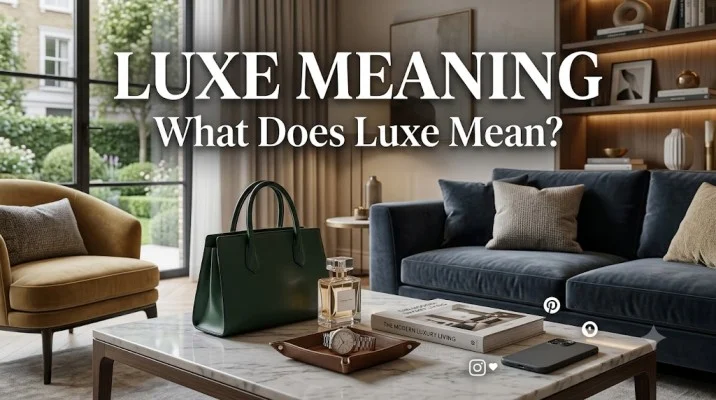
Luxury can be simple. Sometimes, one word is enough to make something feel elegant, premium, and carefully chosen. That is where luxe meaning becomes useful. You may see “luxe” in fashion, beauty, hotels, home décor, travel, or product descriptions when something is associated with a more luxurious experience. But what exactly does it mean?
The luxe definition is generally connected to luxury, richness, comfort, or high-end quality. In everyday English, luxe means something luxurious or sophisticated, often with a stylish and polished feel. If you have wondered what does luxe mean, its meaning can change slightly depending on context, but the central idea stays the same. This guide explains the meaning of luxe, its pronunciation, common usage, and even luxe meaning in Tamil, so you can understand and use the word confidently.
Definition & Meaning
Luxe means luxurious, elegant, sophisticated, or high-end.
It is commonly used as a shortened or stylish form related to luxury. The word often describes something that looks, feels, or seems more expensive and refined than ordinary alternatives.
For example:
- Luxe apartment = a luxurious or high-end apartment
- Luxe hotel = an upscale or luxurious hotel
- Luxe makeup = premium or sophisticated makeup
- Luxe fabric = rich, high-quality fabric
- Luxe lifestyle = a lifestyle associated with comfort, elegance, and luxury
- Luxe vacation = an upscale or indulgent vacation
The important thing to understand is that luxe does not always mean extremely expensive. It can describe the overall feeling or appearance of something.
Imagine two bedrooms. One has basic furniture and simple lighting. The other has soft bedding, elegant furniture, warm lighting, beautiful decorations, and premium materials. Someone might call the second room luxe because it creates a luxurious experience.
Example in a conversation
Mia: “How was the hotel?”
Sara: “Amazing! The room was so luxe.”
Mia: “Was it expensive?”
Sara: “A little, but the design and service were incredible.”
Here, luxe describes the hotel’s upscale feeling, not just its price.
The word can also be used casually:
“I want a luxe-looking bedroom without spending a fortune.”
This means the person wants their bedroom to look luxurious, even if they do not want to spend a lot.
So, depending on context, luxe can suggest:
- Luxury
- Elegance
- Premium quality
- Comfort
- Sophistication
- High-end style
- Rich appearance
Background & History
The word luxe has a long connection with the idea of luxury. Its roots can be traced through French, where luxe means luxury.
English speakers have borrowed many words from French over the centuries, especially in areas such as fashion, food, art, beauty, and lifestyle. Because of this connection, luxe often has a stylish and sophisticated feeling.
The broader word luxury comes from Latin luxuria, which was associated with excess, abundance, and extravagance. Over time, the idea developed into the modern concept of something comfortable, desirable, rare, or expensive.
In modern English, luxe is often used as a fashionable adjective or marketing term. You might see brands describe a product as:
- “luxe skincare”
- “luxe bedding”
- “luxe collection”
- “luxe interiors”
The word became especially popular in lifestyle, fashion, beauty, hospitality, and online marketing.
Social media also helped make short, stylish words like luxe more common. On platforms such as Instagram and Pinterest, people often use it to describe an aesthetic.
For example:
“Creating a luxe bedroom on a budget.”
This does not necessarily mean buying the most expensive furniture. It can mean creating an elegant visual style through lighting, colors, textures, and decoration.
Today, luxe can be found in both formal advertising and casual online language. A person might describe a designer handbag as luxe, but they might also call a cozy candle-lit evening “luxe vibes.”
Its modern meaning is therefore broader than simply “expensive.”
Usage in Various Contexts
The meaning of luxe stays close to luxury, but the way people use it changes depending on the situation.
1. Fashion
Fashion brands frequently use luxe to suggest premium design or materials.
“She wore a luxe velvet dress to the event.”
This suggests the dress looked rich, elegant, and sophisticated.
2. Beauty
Beauty products may be described as luxe when they have premium packaging, ingredients, presentation, or branding.
“This moisturizer has such a luxe feel.”
The person may be talking about texture and experience rather than price.
3. Travel
Hotels and vacation experiences often use luxe to communicate an upscale atmosphere.
“We booked a luxe resort for our anniversary.”
This suggests comfort, excellent service, beautiful surroundings, and premium amenities.
4. Home Decor
The word is common in interior design.
“I want a luxe living room with soft lighting and elegant furniture.”
Here, luxe refers to the overall look and atmosphere.
5. Social Media
On Instagram or TikTok, someone might caption a photo:
“Sunday morning, but make it luxe ✨”
This means they are presenting an ordinary moment in a stylish, elegant, or indulgent way.
6. Texting
Friends may use the word casually.
Jake: “Where are you staying?”
Tom: “Some luxe hotel downtown.”
Jake: “Okay, fancy! 😂”
Here, luxe means upscale or fancy.
7. Gaming
In gaming communities, luxe may describe premium cosmetics, skins, environments, or items.
“That character skin looks luxe.”
It suggests the item has a premium, polished, expensive-looking appearance.
Common Misconceptions & Clarifications
One common misunderstanding is that luxe always means expensive.
Not necessarily.
Something can look or feel luxe without costing a huge amount. A person might buy inexpensive candles, blankets, and lighting and create a bedroom that looks luxurious.
For example:
“This affordable hotel has a luxe atmosphere.”
The hotel may not be extremely expensive. The speaker is focusing on its appearance or experience.
Luxe Does Not Always Mean Luxury
Although the two words are closely related, luxe often works as a stylish descriptive word.
Compare:
“This is a luxury hotel.”
This directly identifies the hotel as a high-end property.
“This hotel has a luxe feel.”
This focuses more on the atmosphere and experience.
Does Luxe Mean Fancy?
Often, yes.
In casual conversation, luxe can mean something like fancy, elegant, or upscale.
However, “fancy” can have a wider meaning. A fancy restaurant could simply be unusual or impressive, while a luxe restaurant specifically suggests luxury and sophistication.
Is Luxe Slang?
Not exactly.
Luxe is a real English word, although it has a fashionable and modern feel. It is commonly used in branding, advertising, lifestyle content, and casual descriptions.
Is Luxe a Positive Word?
Usually, yes.
Calling something luxe is generally a compliment. It suggests that something is attractive, premium, elegant, or desirable.
Similar Terms & Alternatives
There are many words that can replace luxe, depending on the exact meaning.
Luxury
Luxury is the closest general term.
Example:
“They offer luxury accommodation.”
Luxurious
Luxurious describes something that provides great comfort, beauty, or indulgence.
Example:
“The hotel has a luxurious interior.”
Upscale
Upscale means relatively expensive, high-quality, or designed for a wealthier market.
Example:
“They opened an upscale restaurant downtown.”
High-End
High-end refers to products or services that are among the more expensive or premium options.
Example:
“She shops at high-end fashion stores.”
Elegant
Elegant focuses more on beauty, style, and refined appearance.
Example:
“Her dress was simple but elegant.”
Premium
Premium often emphasizes quality, features, or superior positioning.
Example:
“This is their premium skincare range.”
| Term | Main idea | Example |
|---|---|---|
| Luxe | Stylish luxury | “A luxe bedroom” |
| Luxury | High comfort or expense | “A luxury resort” |
| Luxurious | Rich and comfortable | “A luxurious sofa” |
| Upscale | High-class market | “An upscale restaurant” |
| High-end | Premium and expensive | “A high-end watch” |
| Elegant | Refined beauty | “An elegant dress” |
| Premium | Higher quality | “A premium service” |
How to Respond to This Term
If someone uses luxe in conversation, your response depends on the situation.
Casual Response
“Yeah, it looks super fancy!”
This works when someone is describing clothes, a hotel, a room, or another stylish item.
Friendly Response
“I love that luxe vibe!”
This is useful when discussing home decor, fashion, or social media aesthetics.
Funny Response
“Luxe? My wallet definitely disagrees. 😂”
This works when something looks expensive or luxurious.
Professional Response
If you are discussing a product or business, you can use a more precise response:
“Yes, the design gives the product a premium and sophisticated appearance.”
If You Are Unsure
You can ask:
“When you say luxe, do you mean luxurious or expensive?”
That is especially useful because people sometimes use the word loosely.
In Texting
If a friend sends:
“Look at my new luxe setup!”
You might respond:
“Okayyy, fancy! 🔥”
or:
“That looks seriously luxe! ✨”
Matching the person’s tone usually makes the conversation feel natural.
Regional or Cultural Differences
Luxe is used in English-speaking cultures, but its popularity can vary by region.
In the United States, the word is common in fashion, beauty, interior design, travel, and marketing. American brands often use phrases such as “luxe collection” or “luxe beauty.”
In the United Kingdom, luxe is also understood and used, particularly in fashion, lifestyle, and luxury marketing.
The word is also recognized internationally because luxury brands and social media have helped spread it beyond native English-speaking communities.
However, the exact feeling can differ.
- For some people, luxe sounds sophisticated and fashionable. For others, it may sound like a marketing word designed to make an ordinary product appear more premium.
- For example, calling a candle “luxe” may simply mean it has elegant packaging and a rich scent.
Cultural Difference in Meaning
In cultures where luxury branding is very common, luxe may sound normal.
In other settings, people may prefer simpler words such as:
- Expensive
- Fancy
- Elegant
- Premium
- High-quality
So, while the core idea remains the same, the style of the word depends on the audience.
Comparison with Similar Terms
The words luxe, luxury, luxurious, upscale, fancy, premium, and high-end can look interchangeable, but each has a slightly different feel.
| Word | Focus | Tone | Example |
|---|---|---|---|
| Luxe | Stylish luxury | Fashionable | “A luxe interior” |
| Luxury | Comfort and exclusivity | Neutral/Formal | “A luxury resort” |
| Luxurious | Rich experience | Descriptive | “A luxurious bathroom” |
| Fancy | Impressive or decorative | Casual | “A fancy dinner” |
| Upscale | Higher social/price level | Professional | “An upscale neighborhood” |
| Premium | Superior quality | Commercial | “Premium coffee” |
| High-end | Top market level | Modern | “A high-end camera” |
The main difference is luxe’s stylish feeling.
If you say:
“This room is expensive.”
You are talking about price.
If you say:
“This room is luxe.”
You are describing the luxurious look, feeling, or experience.
That distinction makes the word especially useful in lifestyle writing and social media.
Usage in Online Communities & Dating Apps
Online, luxe is often connected with aesthetics.
On Instagram, Pinterest, TikTok, and other platforms, users may use the word to describe:
- Fashion
- Makeup
- Hotels
- Cars
- Home interiors
- Vacations
- Restaurants
- Lifestyle content
For example:
“Luxe vacation vibes ✨”
This suggests an elegant and indulgent travel experience.
Dating Apps
On dating apps such as Tinder, Bumble, or Hinge, you may see luxe in profiles describing lifestyle preferences.
Someone might write:
“Looking for good food, travel, and a little luxe living.”
This probably means they enjoy comfort, stylish experiences, and higher-end activities.
Another profile might say:
“Coffee dates > luxe dinners.”
Here, the person is contrasting simple dates with expensive or fancy experiences.
How to Respond
If someone says:
“I love a luxe weekend getaway.”
You could reply:
“Same! A nice hotel and good food sound perfect.”
If you are not into luxury experiences, you can still respond honestly:
“I’m more into low-key trips, but I definitely appreciate a beautiful place.”
The important thing is not to assume that luxe automatically means someone is wealthy. It can simply describe their preferred style or aesthetic.
Hidden or Offensive Meanings
There is no widely recognized offensive or hidden meaning associated with the standard word luxe.
It is normally positive and describes luxury, style, quality, or sophistication.
However, context can sometimes make it sound sarcastic.
For example:
“Wow, very luxe.” 😂
If someone says this while looking at a very ordinary object, they may be joking.
Imagine a friend buys a $5 plastic chair and calls it a “luxe throne.”
You might reply:
“Absolutely luxe. Buckingham Palace is jealous. 😂”
The word itself is not offensive. The humor comes from exaggerating its meaning.
Can Luxe Sound Pretentious?
Sometimes.
In certain contexts, people may see luxe as overly commercial or pretentious, especially if it is used to make a basic product sound more expensive than it really is.
For example:
“Our luxe water bottle.”
Someone might joke:
“It’s still a water bottle.”
Again, this is about tone and marketing style, not an offensive definition.
Suitability for Professional Communication
Luxe can be appropriate in professional communication, especially in industries related to fashion, beauty, hospitality, interior design, travel, and luxury products.
For example:
“Our new collection combines luxe materials with modern design.”
That sounds natural in fashion marketing.
However, in technical, academic, or formal business writing, more precise words may be better.
Instead of:
“We provide a luxe experience.”
You could write:
“We provide a premium customer experience.”
Instead of:
“This is a luxe product.”
You could say:
“This product is designed with premium materials and high-quality finishes.”
When Luxe Works Well
Use it in:
- Fashion marketing
- Beauty advertising
- Hotel descriptions
- Interior design
- Lifestyle content
- Social media
- Product branding
- Travel writing
When to Choose Another Word
Use luxurious, premium, high-end, or a more specific term when precision matters.
For professional communication, the best word depends on whether you are describing price, quality, appearance, comfort, or exclusivity.
FAQs
What does luxe mean in simple words?
Luxe means luxurious, elegant, stylish, or high-end. It often describes something that feels premium or looks expensive.
Is luxe short for luxury?
It is closely related to luxury and is commonly used as a fashionable shortened form associated with luxury. It can function as a descriptive word in modern English.
Does luxe mean expensive?
Not always. Something can look or feel luxe without actually being very expensive. The word can describe appearance, quality, comfort, or atmosphere.
Is luxe a slang word?
Not exactly. Luxe is a standard word, although it is especially popular in fashion, lifestyle, branding, and social media language.
What is the difference between luxe and luxury?
Luxury is the broader noun, while luxe is often used as a stylish descriptor. “Luxury hotel” and “luxe hotel” can describe the same type of place, but “luxe” often sounds more fashionable.
What does luxe mean on social media?
On social media, luxe usually describes something that looks stylish, luxurious, polished, or expensive. It is often connected with fashion, beauty, travel, and home aesthetics.
Is calling something luxe a compliment?
Usually, yes. Calling something luxe generally suggests that it looks elegant, premium, sophisticated, or luxurious.
Conclusion
The luxe meaning is simple: it describes something that feels luxurious, elegant, premium, or high-end. You may see the word in fashion, beauty, travel, interior design, product descriptions, social media captions, and dating profiles.
Luxe does not always mean something is extremely expensive. It can describe the look, atmosphere, quality, comfort, or overall experience of something. That is why someone can create a “luxe” room without buying the most expensive furniture or call a product luxe because of its elegant design.
When you see this word online or in conversation, think luxury with a stylish, modern feel. Once you understand that idea, it becomes much easier to recognize and use naturally.
Read More Related Articles:
- What Does Subaru Mean and Why Does the Car Have Six …
- What Does “Biased” Mean? Simple Definition & Real Life …
- Gorgeous Meaning | Definition, Examples, Synonyms & How …