If you’ve spent time on TikTok, Instagram, X (formerly Twitter), Snapchat, Discord, or in gaming communities, you’ve probably come across the acronym ASL and wondered what it means. Like many internet slang terms, its meaning isn’t immediately obvious, and the way people use it can vary depending on the context and tone.
Understanding modern internet abbreviations is becoming increasingly important because online conversations move fast, and slang evolves almost daily. Some abbreviations are harmless and humorous, while others can be personal questions or casual inquiries. ASL falls into the category of conversational slang, making it especially important to understand how and when to use it properly.
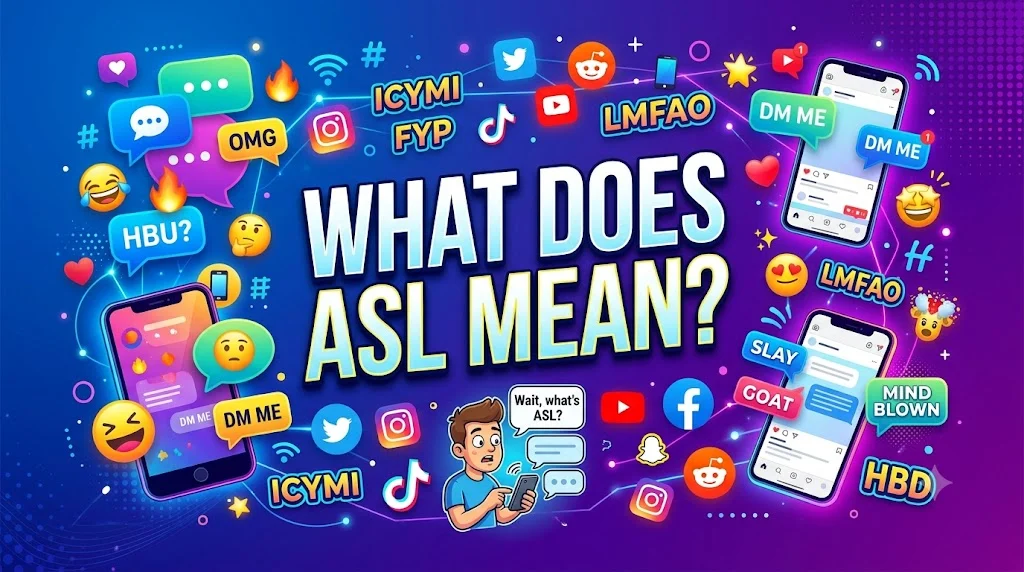
This guide explains what does ASL mean, where it came from, why it became popular, how people use it online, and when you should use it yourself. You’ll also find examples, comparisons with similar slang, professional alternatives, common mistakes, FAQs, and practical tips to help you navigate this classic internet abbreviation.
What Does ASL Mean? Meaning & Definition
ASL is an internet slang acronym that most commonly stands for “Age, Sex, Location.” It is a direct question used to ask someone about their basic personal information. The abbreviation originated in early internet chat rooms and has been a staple of online communication for decades.
The phrase is commonly used in:
Chat rooms and forums
TikTok comments and DMs
Instagram direct messages
X (Twitter) conversations
Discord chats
Dating apps
Gaming communities
Online introductions
Because the abbreviation has been around for so long, most internet users recognize it immediately. However, newer generations may encounter it without understanding its full meaning.
Definition
| Term | Meaning |
|---|---|
| ASL | Internet slang meaning “Age, Sex, Location.” It is a question used to ask someone about their basic personal information, particularly in online chat settings. |
Pronunciation: Most users spell out the letters individually: A-S-L.
Origin
The exact origin of ASL can be traced back to the early days of internet chat rooms in the 1990s. As online communication became more popular, users needed a quick way to learn basic information about the people they were chatting with.
Several key points about its origin:
The abbreviation emerged in AOL chat rooms and IRC (Internet Relay Chat) channels
It became the standard way to introduce yourself online
The format was quickly adopted across multiple platforms
It was particularly popular in the late 1990s and early 2000s
The abbreviation spread through early social media and messaging platforms
As internet culture evolved, ASL remained a recognizable part of online communication. While it is still used today, its popularity has declined somewhat with the rise of social media profiles that display this information automatically.
The term represents an era when online anonymity was more common, and people needed to ask these basic questions to understand who they were talking to.
Popularity
ASL became exceptionally popular during the early days of the internet and maintained its relevance for decades. Several factors contributed to its widespread adoption:
Pioneering internet chat culture
AOL Instant Messenger and IRC popularity
Easy to remember and type
Standardized way to learn about conversation partners
Adopted across multiple platforms
Recognized internationally
Used in dating and social contexts
Part of internet culture history
While the abbreviation is less prominent today due to social media profiles displaying this information, it remains widely recognized and understood by most internet users. ASL is often referenced nostalgically in discussions about early internet culture.
Where You May See ASL
| Platform | Common Usage |
|---|---|
| TikTok | Comments, DMs, video replies |
| DMs, comments, introductions | |
| X (Twitter) | Casual conversations, replies |
| Discord | Introductions, new member chats |
| Dating Apps | Initial conversations |
| Gaming Communities | Player introductions |
| Relationship discussions, casual chat | |
| Snapchat | Quick questions, new friends |
How It Is Used
ASL is generally used as a direct question to ask about someone’s age, gender, and location.
The intended tone depends heavily on context.
Curious Tone 🤔
Used when genuinely interested in learning about someone.
Example:
“Hey, ASL? I’m curious about who I’m talking to.”
Standard Introduction Tone 😊
Used as a traditional way to start conversations online.
Example:
“ASL? I’m 22, F, from New York.”
Casual Conversation Starter
Used to break the ice in new online interactions.
Example:
“You seem cool, ASL?”
Nostalgic Tone
Used as a reference to early internet culture.
Example:
“Remember when everyone would ask ASL in chat rooms?”
Examples
Friendly Examples
These examples show how ASL is used in everyday conversations.
“ASL? I want to know who I’m chatting with.”
“I’m 25, M, from California. ASL?”
“We’ve been talking for a bit, what’s your ASL?”
“ASL is the first question I always ask online.”
Important: Even in casual settings, not everyone is comfortable sharing personal information. Always respect someone’s boundaries and privacy.
Professional Examples
ASL is not appropriate for professional settings.
Instead of using ASL, consider:
“I’d love to know more about your background.”
“Where are you located for work purposes?”
“What are your professional details?”
“Could you share your location for our records?”
“Tell me about your professional experience.”
Funny Examples
Internet memes often reference the classic ASL question.
Examples:
“Me asking ASL in every chat like it’s still 1999”
“ASL? I just want to know if we’re in the same time zone”
“People online: ASL? Me: Adult, Sometimes Lost”
“The OG question: ASL. The new question: WYLL”
These examples illustrate meme culture and internet nostalgia but should not be interpreted as appropriate for real serious conversations.
Comparison with Similar Terms
Many internet abbreviations ask about personal information or identity. Here’s how ASL compares.
| Slang | Meaning | Offensive? | Typical Tone |
|---|---|---|---|
| ASL | Age, Sex, Location | Low | Curious, introductory |
| WYLL | What You Look Like | None | Visual inquiry |
| WYD | What You Doing | None | Casual, conversational |
| WYA | Where You At | None | Location-based |
| Pic | Picture | None | Visual request |
| IRL | In Real Life | None | Authenticity check |
| SMH | Shaking My Head | None | Disappointment |
Among these abbreviations, ASL is one of the oldest and most recognized internet slang terms, representing a foundational part of online communication history.
Alternate Meanings
Unlike some internet acronyms that have one primary definition, ASL has several widely recognized meanings depending on context.
Age, Sex, Location
The most common meaning, used to ask for basic personal information in online chats.
American Sign Language
A legitimate alternate meaning, referring to the visual language used by the deaf community in the United States and parts of Canada.
As Hell
Used in some casual contexts as an abbreviation for “as hell” (e.g., “I’m tired ASL” meaning “I’m tired as hell”).
When you encounter ASL in any context, rely on the surrounding conversation to determine the intended meaning. In professional or educational settings, ASL almost always refers to American Sign Language.
Professional or Polite Alternatives
If you want to ask about someone’s background or location professionally, there are much better alternatives.
| Situation | Better Alternative |
|---|---|
| Professional networking | “I’d love to learn more about your background.” |
| Business communication | “Where are you based for work?” |
| Formal introduction | “Tell me about your professional experience.” |
| Workplace setting | “What’s your role and location?” |
| Conference call | “Could you introduce yourself?” |
| Team building | “I’d appreciate getting to know everyone better.” |
These alternatives communicate your desire to learn about someone professionally without sounding informal or intrusive.
Common Mistakes
Many people misunderstand or misuse ASL. Here are the most common mistakes.
Assuming Everyone Knows the Online Meaning
While ASL is widely recognized online, some people may interpret it as American Sign Language, especially in professional or educational contexts.
Using It in Professional Settings
ASL is firmly in the category of casual slang. Using it professionally can make you appear unprofessional or immature, particularly if someone interprets it as American Sign Language.
Pressuring Someone for Personal Information
Even if you ask ASL, not everyone is comfortable sharing their age, gender, or location online. Respecting boundaries is important.
Confusing with American Sign Language
In professional or educational contexts, ASL almost always means American Sign Language. Confusing the two can lead to awkward misunderstandings.
Using It Inappropriately
The term works best in casual, social situations. Using it in serious conversations may come across as inappropriate or overly personal.
Quick Tips
Keep these practical guidelines in mind before using ASL.
Know the multiple meanings before using this abbreviation.
Consider the context and platform carefully.
Avoid using it in professional or academic settings.
Respect boundaries if someone doesn’t want to share information.
Consider your relationship with the other person.
Clarify if there’s potential confusion about meaning.
When in doubt, choose more specific language instead.
Be aware that ASL in professional settings means American Sign Language.
FAQ
What does ASL mean in text?
In text messages, ASL most commonly means “Age, Sex, Location.” It is used as a question to ask about someone’s basic personal information.
What does ASL mean on TikTok?
On TikTok, ASL can have multiple meanings. It most commonly means “Age, Sex, Location” in casual conversations, but can also refer to American Sign Language depending on context.
What does ASL mean in slang?
In slang, ASL stands for “Age, Sex, Location.” It is one of the oldest internet abbreviations and is used to ask for basic personal information.
Is ASL offensive?
Generally no. ASL is considered a neutral, informational question. However, some people may find it intrusive if they don’t want to share personal information.
What does ASL mean in dating?
In dating apps and contexts, ASL means “Age, Sex, Location.” It is used as a quick way to learn basic information about potential matches.
Where did ASL originate?
ASL originated in early internet chat rooms like AOL and IRC in the 1990s. It became the standard way to introduce yourself online.
Should I use ASL at work?
No. In professional settings, ASL almost always means American Sign Language. Using it to ask for personal information would be inappropriate and confusing.
Are there polite alternatives to ASL?
Yes. You can say things like:
“I’d love to learn more about your background.”
“Where are you based?”
“Tell me about your professional experience.”
“What’s your location for work?”
These alternatives are more suitable in professional settings.
Why do people use abbreviations like ASL?
People use abbreviations like ASL to type faster, ask quick questions, and maintain casual conversation flow. ASL became particularly popular in early internet culture where anonymity was common.
Conclusion
So, what does ASL mean? In most online contexts, it stands for “Age, Sex, Location,” a classic question used to learn basic personal information about someone you’re chatting with. However, the meaning can vary significantly depending on context. In professional or educational settings, ASL almost always refers to American Sign Language. Understanding these multiple meanings is essential for accurate interpretation.
Understanding classic terms like ASL can help you navigate online conversations more effectively and appreciate internet culture history. The abbreviation represents one of the earliest examples of internet slang and has remained recognizable for decades. Whether you’re chatting with new people online or engaging in nostalgic conversations about early internet culture, knowing the meaning behind popular slang helps you communicate more effectively and avoid confusion.
When using ASL, always consider your audience and context. It works perfectly for casual conversations and social media but has no place in professional or formal communication. Additionally, always respect boundaries and remember that not everyone is comfortable sharing personal information online. By understanding appropriate usage, you can confidently use this classic abbreviation when the situation calls for it.
Discover More Post:
- What Does Sigma Mean| Complete Meaning, Origin, Usage …
- What Does PMO Mean| Complete Meaning, Origin, Usage …
- What Does Huzz Mean| Complete Meaning, Origin, Usage …