Quick Answer:
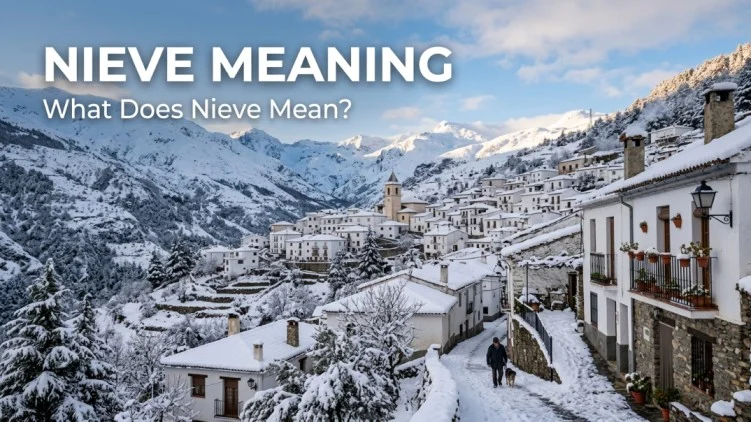
Nieve is a Spanish word that usually means “snow” in English. It can describe falling snow, snow on the ground, or snowy weather.
A single Spanish word can tell you a lot about a conversation when you know how to read it. If you have seen nieve in a Spanish message, caption, song, travel post, or conversation, you may be wondering what it means and why someone used it.
The simple answer is that nieve means “snow” in English. It is a common Spanish word used when talking about winter weather, mountains, cold places, and snowy landscapes. You may see it in everyday conversations, social media posts, travel discussions, gaming chats, or messages about the weather.
If you are learning Spanish, talking with Spanish speaking friends, traveling to a Spanish speaking country, or simply trying to understand something you saw online, knowing this word can make the meaning much clearer. In this guide, we will explore its definition, history, different uses, cultural meaning, online usage, related words, and common misunderstandings.
Definition & Meaning
The Spanish word nieve means “snow” in English.
It is a feminine noun, so you will commonly see it used with the feminine article la.
For example:
La nieve es blanca.
This means:
“The snow is white.”
The word can refer to snow as a natural substance, snowy weather, or snow that has fallen onto the ground.
Here are some common examples:
- Hay mucha nieve.
“There is a lot of snow.” - La nieve está cayendo.
“The snow is falling.” - Me gusta la nieve.
“I like snow.” - La montaña tiene nieve.
“The mountain has snow.” - La nieve está fría.
“The snow is cold.”
Nieve in Everyday Spanish
You might hear the word when people discuss winter weather.
Carlos: “¿Está nevando?”
Maria: “Sí, hay mucha nieve.”
Carlos: “¡Qué bonito!”
Here, nieve clearly refers to snow.
It is important to understand the difference between nieve and nevar.
Nieve is a noun meaning snow.
Nevar is a verb meaning to snow.
For example:
Hay nieve en la calle.
“There is snow in the street.”
But:
Está nevando.
“It is snowing.”
This small difference is useful when learning Spanish because both words are closely connected but have different grammatical roles.
Background & History
The word nieve has an interesting linguistic history. It comes from Latin nix, with the related form nivis, meaning snow.
As spoken Latin developed into the Romance languages, the word changed over time. Spanish eventually developed the modern form nieve.
This connection can still be seen in other Romance languages. For example, Italian uses neve, while Portuguese uses neve. French uses neige. These words share historical roots even though their modern forms are different.
The meaning of nieve has remained closely connected to frozen precipitation throughout the development of Spanish.
Today, it is a standard Spanish word and is understood across Spanish speaking regions.
The amount of snow people experience naturally varies by location. Some Spanish speaking areas have snowy mountains and cold winters, while other regions rarely or never receive natural snow.
Because of this, nieve can have different cultural associations.
For someone living near snowy mountains, it may be a normal part of winter life. For someone from a warm tropical region, snow may feel unusual, exciting, or strongly connected with holidays and travel.
The word is also common in literature, songs, movies, advertisements, travel writing, and social media. Snow can symbolize winter, beauty, silence, coldness, purity, or nostalgia, so nieve may sometimes have a figurative or artistic role.
Usage in Various Contexts
The most common use of nieve is simply to describe snow.
Casual Conversation
Luis: “¿Hay nieve en las montañas?”
Ana: “Sí, todavía hay mucha.”
The speakers are talking about snow on the mountains.
Weather Discussions
“La nieve llegará esta noche.”
This means:
“The snow will arrive tonight.”
Travel
A traveler might ask:
“¿Hay nieve en esa estación de esquí?”
This means:
“Is there snow at that ski resort?”
Social Media
Someone visiting a snowy location might post:
“Primera vez viendo tanta nieve. ❄️”
This means:
“First time seeing this much snow.”
Texting
A friend might send:
“Está nevando aquí ❄️”
You could understand this as:
“It’s snowing here.”
Gaming
In a game with a winter map, a Spanish speaking player might say:
“Me encanta este mapa de nieve.”
That means:
“I love this snow map.”
Casual Descriptions
People can also use nieve when describing objects or places.
“La casa está cubierta de nieve.”
“The house is covered in snow.”
The word itself remains simple. The surrounding words tell you exactly what kind of snow related situation the speaker means.
Common Misconceptions & Clarifications
One common misunderstanding is thinking that nieve means “snowing.” It does not.
Nieve = snow
Nevar = to snow
Está nevando = it is snowing
This distinction matters when creating a Spanish sentence.
Another misunderstanding is assuming that nieve always refers to weather. It usually does, but it can also appear in descriptions, names, poetry, stories, and figurative language.
Is Nieve a Person’s Name?
Nieve can appear as a personal name in Spanish speaking contexts, although this is much less common than its ordinary meaning as snow.
So if you see Nieve written as a name, capitalization and context can help you understand whether it refers to a person or the weather.
Does Nieve Mean Ice?
No.
Nieve means snow.
The common Spanish word for ice is hielo.
Snow and ice are related, but they are not the same thing.
Does Nieve Mean Cold?
Not directly.
Snow is often associated with cold weather, but frío is the Spanish word for cold.
Is Nieve Slang?
Normally, no.
Nieve is a standard Spanish vocabulary word, not internet slang.
Similar Terms & Alternatives
Spanish has several words connected with snow, winter, and cold weather.
Nevar
Nevar means “to snow.”
Example:
“Va a nevar mañana.”
“It is going to snow tomorrow.”
Nevado
Nevado can mean snowy or snow covered, depending on context.
Example:
“El paisaje nevado es hermoso.”
“The snowy landscape is beautiful.”
Hielo
Hielo means ice.
Example:
“El agua se convirtió en hielo.”
“The water turned into ice.”
Frío
Frío means cold.
Example:
“Hace mucho frío.”
“It is very cold.”
Invierno
Invierno means winter.
Example:
“Me gusta el invierno.”
“I like winter.”
| Spanish word | English meaning | Main use |
|---|---|---|
| Nieve | Snow | Snow itself |
| Nevar | To snow | Weather action |
| Nevado | Snowy / snow covered | Describing places or objects |
| Hielo | Ice | Frozen water |
| Frío | Cold | Temperature |
| Invierno | Winter | Season |
How to Respond to This Term
If someone uses nieve in a conversation, your response depends on what they are talking about.
Casual Response
If someone says:
“Hay mucha nieve aquí.”
You could reply:
“¡Qué bonito! Me encantaría verla.”
That means:
“How beautiful! I would love to see it.”
Curious Response
If you have never experienced snow, you could ask:
“¿De verdad? ¿Cuánta nieve hay?”
That means:
“Really? How much snow is there?”
Funny Response
If your friend sends you a snowy picture:
“Eso parece una película de invierno. 😂”
Travel Response
If someone tells you their destination has snow:
“¿Es un buen lugar para visitar en invierno?”
“Is it a good place to visit in winter?”
Short Text Response
You can simply say:
“Wow, nieve ❄️”
or:
“Qué bonito.”
The best response depends on the relationship and conversation.
Regional or Cultural Differences
Nieve is widely understood across Spanish speaking countries. Its basic meaning does not change significantly from one region to another.
However, people’s personal relationship with snow can be very different.
In countries and regions with high mountains, snow may be a regular part of life. People may talk about snow while discussing skiing, road conditions, hiking, tourism, or winter sports.
In warmer Spanish speaking areas, natural snow may be much less common. For some people, seeing snow can be a special travel experience.
Snow can also have strong cultural associations with Christmas and winter celebrations. This is especially noticeable in places where Christmas imagery includes snowy landscapes, even if the local climate is warm.
Social media has made these cultural differences easier to notice. A person from a tropical region might post an excited photo after seeing snow for the first time, while someone from a snowy mountain region may treat it as an ordinary winter day.
The word itself remains the same.
Nieve means snow.
What changes is the experience people associate with it.
Comparison with Similar Terms
It is useful to compare nieve with several Spanish weather words.
| Word | Meaning | Example |
|---|---|---|
| Nieve | Snow | Hay nieve afuera. |
| Nevar | To snow | Va a nevar. |
| Lluvia | Rain | Hay mucha lluvia. |
| Granizo | Hail | Está cayendo granizo. |
| Hielo | Ice | Hay hielo en la carretera. |
| Frío | Cold | Hace frío. |
| Invierno | Winter | Es invierno. |
These words describe different things.
For example:
“Hay nieve.”
“There is snow.”
“Está nevando.”
“It is snowing.”
“Hace frío.”
“It is cold.”
These sentences can describe the same general winter situation, but they do not have exactly the same meaning.
Usage in Online Communities & Dating Apps
The word nieve can appear online just as naturally as it does in everyday Spanish.
On social media, people may use it when posting winter photographs, vacation pictures, mountain trips, or funny weather updates.
For example:
“Mi primera Navidad con nieve. ❄️🎄”
“My first Christmas with snow.”
A travel profile might say:
“Prefiero la nieve a la playa.”
“I prefer snow to the beach.”
On dating apps, someone might mention nieve as part of their interests.
For example:
“Busco a alguien que ame la nieve y las montañas.”
“I am looking for someone who loves snow and mountains.”
This does not automatically contain hidden romantic or sexual meaning. It normally means exactly what it says.
In gaming communities, nieve may describe a snowy map, environment, character outfit, or game event.
“El nuevo mapa tiene mucha nieve.”
“The new map has lots of snow.”
Online Tip
Always read the surrounding sentence before assuming a special meaning. Nieve is normally a straightforward Spanish word.
Hidden or Offensive Meanings
In standard Spanish, nieve does not have a common offensive meaning.
Its normal meaning is snow.
However, language can become figurative in jokes, songs, poetry, memes, or online conversations. A person may use a normal word creatively to describe something else.
That does not mean nieve itself is offensive slang.
You should also be careful with automatic translations. Translation tools sometimes provide the most basic dictionary meaning without explaining how the word works in a complete sentence.
For example:
“Está nevando.”
A beginner might incorrectly connect this with the noun nieve, but the sentence actually means:
“It is snowing.”
Another possible confusion happens when Nieve is used as a name or title. Capitalization and context can help distinguish a proper name from the ordinary noun.
The safest approach is simple:
Look at the complete sentence before deciding what the speaker means.
Suitability for Professional Communication
Nieve is completely appropriate in professional communication when you are talking about snow.
You might see it in:
- Weather reports
- Travel websites
- Ski resort information
- Road safety notices
- Scientific writing
- Tourism documents
- News reports
- School materials
For example:
“La nieve puede afectar las carreteras durante el invierno.”
This means:
“Snow can affect roads during winter.”
In a professional setting, there is no need to replace nieve with a more formal word. It is already a standard Spanish term.
However, if you are writing professionally, make sure you use the correct related word.
- Use nieve for snow.
- Use nevar for the action of snowing.
- Use nevado when describing something as snowy or snow covered.
- Use hielo for ice.
Using the correct word will make your Spanish clearer and more natural.
FAQs
What does nieve mean in English?
Nieve means “snow” in English. It is a common Spanish noun used to describe snow and snowy conditions.
Is nieve Spanish for snow?
Yes. Nieve is the standard Spanish word for snow.
What is the difference between nieve and nevar?
Nieve is the noun meaning snow, while nevar is the verb meaning to snow.
Does nieve mean ice?
No. Nieve means snow, while hielo means ice.
Is nieve slang?
No. Nieve is a standard Spanish word, not normally slang or internet terminology.
How do you pronounce nieve?
It is commonly pronounced roughly like “NYEH-beh.” The exact pronunciation can vary slightly by Spanish speaking region.
Can nieve be a name?
Yes, Nieve can also appear as a personal name, although its ordinary Spanish meaning is snow. Context and capitalization help determine which meaning is intended.
Conclusion
The word nieve is a simple but useful Spanish term that means “snow” in English. You can find it in weather conversations, travel posts, winter stories, social media captions, gaming chats, and everyday Spanish.
It is important not to confuse nieve with nevar, which means “to snow,” or hielo, which means “ice.” The surrounding words usually make the intended meaning clear.
Whether someone is talking about a snowy mountain, sharing a winter photo, describing the weather, or mentioning snow in a casual message, nieve normally has a straightforward meaning. Once you learn this word and its related forms, you can understand a wide range of Spanish sentences more easily.
Read More Related Articles:
What Does UwU Mean| Complete Meaning, Origin, Usage …
What Does OFC Mean| Complete Meaning, Origin, Usage …
What Does TLDR Mean| Complete Meaning, Origin, Usage …